
Abyssinian Guinea Pig Animal Facts | Cavia porcellus
October 13, 2023  written by Sidra Batool
 written by Sidra Batool
Abyssinian guinea pigs are a popular breed of guinea pig known for their unique coat and playful personalities. They are relatively common as both pets and show animals.
Abyssinians have a distinctive rosetted coat, which is characterized by whorls of hair that radiate outward from a central point.
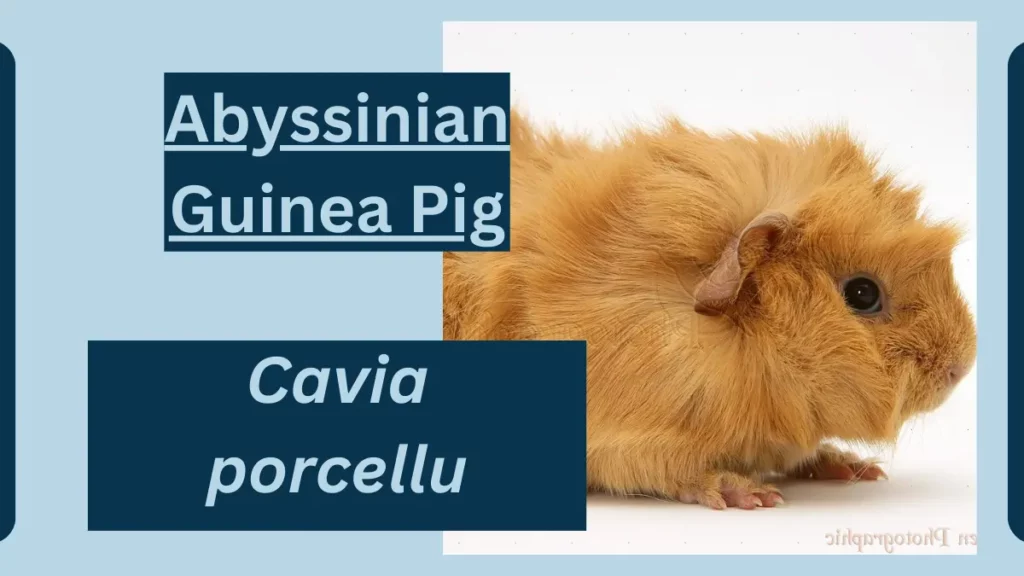
Abyssinian Guinea Pig
Here are some facts about Abyssinian Guinea Pigs:
| Topic | Information |
|---|---|
| Scientific Classification | – Kingdom: Animalia |
| – Phylum: Chordata | |
| – Class: Mammalia | |
| – Order: Rodentia | |
| – Family: Caviidae | |
| – Genus: Cavia | |
| – Species: Caviaporcellus | |
| Origins and Evolution | Abyssinian Guinea Pigs originated in the Andes region of South America and are descendants of the wild cavy (Caviatschudii). They have been domesticated for thousands of years. |
| Characteristics | Mammal’s Anatomy and Appearance: Abyssinian guinea pigs are small rodents with rosette-patterned fur that gives them a unique spikey texture. They have whiskers for sensory perception. |
| Size: Typically, they weigh 1.5 to 2.5 pounds (680 to 1134 grams) and measure about 8 to 10 inches (20 to 25 centimeters) in length. | |
| Distribution and Habitat | Abyssinian guinea pigs are domesticated and found in households and pet stores worldwide. They have no wild habitat. |
| Behavior and Lifestyle | Abyssinian guinea pigs are diurnal, social, and enjoy human interaction. They exhibit playful behavior and are often seen “popcorning.” |
| Reproduction and Life Cycles | Guinea pigs are known for their reproductive vigor, with females giving birth to litters of typically two to four pups. The gestation period is approximately 59 to 72 days. |
| Diet and Prey | They are herbivores, primarily consuming fresh hay, vegetables, and a vitamin C supplement due to their inability to synthesize this essential nutrient. |
| Predators and Threats | Domesticated Abyssinian guinea pigs are vulnerable to health issues such as dental problems, obesity, and respiratory infections. Proper care mitigates these risks. |
| Interesting Facts and Features | Cultural Significance: Guinea pigs are both cherished pets and a delicacy in different parts of the world. |
| Vocal Communication: They use vocalizations like squeaks, purrs, and chirps to communicate with their owners and each other. | |
| Relationship with Humans | Abyssinian guinea pigs have a long history of companionship with humans, making them popular pets, especially for families and children. |
| Conservation Status and Life Today | Domesticated Abyssinian guinea pigs are not considered in terms of conservation status. They are bred in captivity for pets and scientific research. |
Also Read:
File Under:




Leave a Reply