
Threats to Desert Ecosystem and Conservation
 written by Sidra Batool
Deserts may appear harsh and resilient, but they are vulnerable to environmental change and human activity. The threats to the desert biome include climate change, overgrazing, water depletion, invasive species, mining, habitat disturbance, and soil degradation.
These threats to desert ecosystems can affect vegetation, wildlife, soil, water resources, and ecological processes.
Major Threats to Desert Ecosystems
The threats to the desert come from both natural pressures and human activities. Some pressures become more damaging when they occur together, making the threats to desert biomes difficult to manage through a single conservation measure.
1. Climate Change and Rising Temperatures
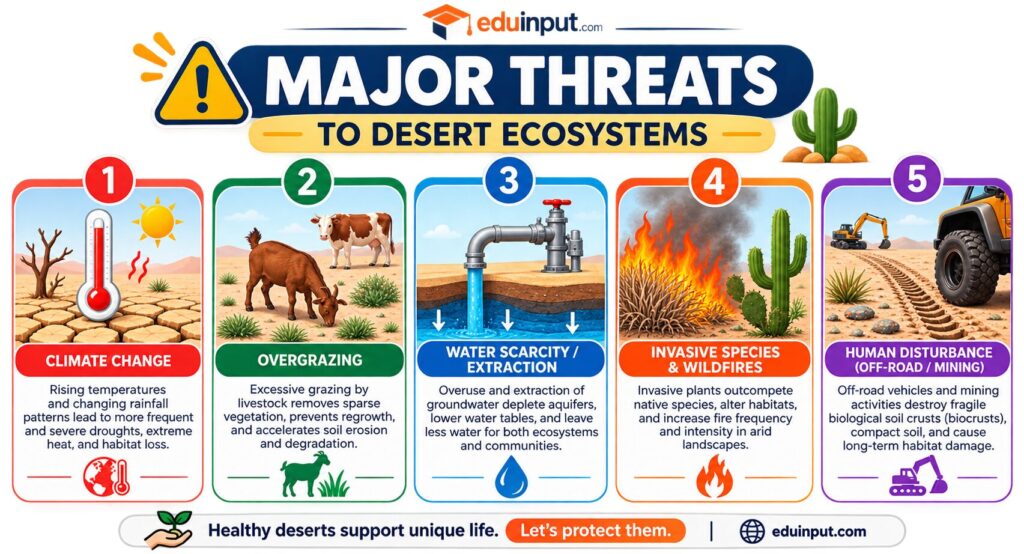
Climate change is one of the major threats to deserts. Rising temperatures can increase heat stress, evaporation, and water demand, while changes in rainfall can produce longer droughts or more irregular precipitation.
These changes can affect vegetation, wildlife, soil processes, and water availability. Climate change can also intensify existing human pressures on dryland ecosystems. IPCC
2. Overgrazing and Vegetation Loss
Overgrazing occurs when livestock consume vegetation faster than plants can recover. Removing sparse native vegetation exposes soil, reduces plant diversity, and increases erosion.
Overgrazing is therefore one of the important desert biome threats, particularly in areas where vegetation already faces water shortages.
3. Off-Road Vehicles and Recreation
Off-road vehicles can damage plants, disturb soil, and destroy fragile biological soil crusts. Repeated vehicle traffic can leave tracks that remain visible for years because desert ecosystems often recover slowly.
Responsible tourism can reduce these threats in the desert by keeping vehicles and visitors on designated routes and avoiding sensitive habitats.
4. Invasive Species and Wildfires
Invasive plants can replace native vegetation and alter desert habitats. Some invasive grasses create continuous fuel across areas that historically experienced relatively little fire.
This can increase wildfire frequency and intensity. Fire can then damage native plants and create additional opportunities for invasive species to spread.
5. Groundwater Extraction and Water Scarcity
Groundwater is an important source of water in many deserts. Excessive extraction for agriculture, cities, and industry can lower groundwater levels and reduce water available to natural ecosystems.
Water scarcity is one of the most serious threats to the desert biome because plants, animals, and human communities all depend on limited water resources.
6. Mining and Industrial Development
Mining, energy development, roads, pipelines, and other industrial activities can directly remove vegetation and disturb desert soils.
These activities can also fragment wildlife habitat, increase traffic, introduce pollution, and alter natural drainage patterns.
7. Soil Degradation and Dust Storms
Desert soils are vulnerable to disturbance because vegetation cover is often sparse. Overgrazing, drought, construction, agriculture, and vehicle use can expose soil to wind erosion.
Soil degradation can contribute to dust storms and reduce the ability of vegetation to become established. These are important threats to deserts, particularly where drought and land-use pressure occur together.
What Are the 5 Main Threats to Desert?
If you need to identify the 5 threats to the desert most commonly discussed in desert conservation, they are:
- Climate change and rising temperatures
- Overgrazing and vegetation loss
- Water scarcity and groundwater extraction
- Invasive species and increased wildfire risk
- Habitat destruction from mining, development, and vehicles
Other threats, including pollution, soil degradation, and poorly managed agriculture, can intensify these pressures.
How Climate Change and Human Pressures affect Deserts?
The threats to the desert often interact rather than occur separately.
For example, higher temperatures and drought can reduce vegetation growth. Overgrazing can then remove the remaining vegetation, leaving more exposed soil and increasing erosion.
A similar cycle can occur with invasive plants. Climate change and altered rainfall can favor some invasive species, while invasive grasses can increase fuel continuity and wildfire risk.
This interaction means that desert biome threats need to be addressed together. Managing only one pressure may not be enough if other pressures continue to weaken the ecosystem.
Desert Conservation Strategies
Effective desert conservation strategies focus on protecting native habitats, reducing human pressures, managing scarce resources, and restoring degraded areas.
Protecting Biological Soil Crusts
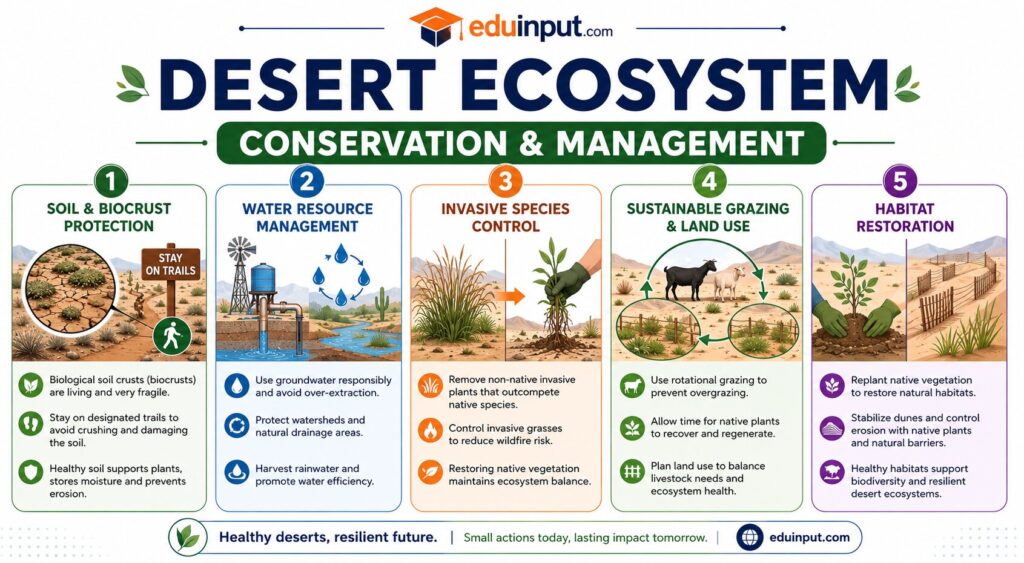
Biological soil crusts can be damaged by vehicles, livestock, and repeated foot traffic. Restricting access to sensitive areas and using designated routes can help protect these fragile communities.
Sustainable Grazing Management
Livestock numbers and grazing areas can be managed to give native vegetation enough time to recover. Rotational grazing and appropriate stocking levels can reduce pressure on vegetation and soil.
Controlling Invasive Species
Early detection and removal of invasive plants can prevent them from spreading across large areas. Controlling invasive grasses can also reduce the risk of frequent and intense wildfires.
Managing Groundwater and Water Resources
Sustainable water management is essential in dry regions. Regulating groundwater extraction, improving irrigation efficiency, protecting natural water sources, and monitoring groundwater levels can help maintain water availability.
Restoring Degraded Desert Habitats
Restoration can include planting native vegetation, stabilizing dunes, reducing erosion, repairing degraded soils, and restoring natural water flows.
Because desert ecosystems often recover slowly, restoration methods should be suited to local climate, soil, and water conditions.
Expanding Protected Areas
National parks, ecological reserves, wildlife areas, and other protected areas can protect vulnerable desert habitats from development and excessive disturbance.
Protected areas are more effective when combined with monitoring, good land management, and protection of wildlife corridors.
How Can We Protect the Desert?
There is no single way to protect the desert. Effective protection requires reducing the pressures that cause habitat loss while maintaining the natural processes that allow desert ecosystems to function.
Simple actions such as staying on designated trails, avoiding damage to vegetation and biocrusts, reducing waste, respecting wildlife, and supporting responsible tourism can reduce local disturbance.
At a larger scale, desert conservation efforts need sustainable water management, responsible grazing, invasive-species control, habitat protection, and climate adaptation.
How Can Desert Ecosystems Be Conserved?
The conservation of desert ecosystems depends on protecting both natural habitats and the resources they rely on.
Key approaches include:
- Protecting sensitive desert habitats
- Conserving groundwater
- Managing livestock grazing
- Controlling invasive species
- Reducing off-road disturbance
- Restoring degraded soils and vegetation
- Protecting biological soil crusts
- Monitoring climate and land-use changes
- Establishing protected areas
- Supporting sustainable tourism
These conservation efforts in the desert can help maintain biodiversity and improve the resilience of ecosystems facing increasing environmental pressure.
Future of Desert Conservation and Research
Modern technology is making desert conservation efforts more precise. Satellite imagery, field sensors, and machine learning can help researchers identify areas with high surface temperatures, low soil moisture, vegetation loss, and increasing bare soil. These indicators can help conservationists prioritize areas for grazing management, water interventions, and habitat restoration.
Satellite systems such as Sentinel-1 and Sentinel-2 can also track vegetation condition, soil moisture, and changes in restored areas over time. Researchers are increasingly combining satellite data with field measurements and monitoring networks to improve drought warnings, assess desertification, and support water management.
Future desert conservation strategies are likely to use AI for faster detection of dune movement, vegetation changes, and environmental degradation. Researchers are also developing scalable measures for biocrust recovery, soil health, bare-soil reduction, and carbon storage, which makes it easier to evaluate whether restoration projects are actually working.
Desert conservation protects biodiversity, soil, water, wildlife habitats, and ecological processes. Deserts support specially adapted species and contribute to nutrient cycling, carbon storage, and other ecosystem functions.
Reducing desert threats also benefits people who depend on dryland water, agriculture, grazing, tourism, and other resources.
Protecting deserts does not mean preventing all natural change. It means reducing avoidable human damage and helping ecosystems maintain their ability to recover from environmental stress.
Frequently Asked Questions
What Are the Biggest Threats to the Desert Biome?
The major threats to the desert biome include climate change, rising temperatures, drought, overgrazing, groundwater depletion, invasive species, wildfire, mining, habitat fragmentation, off-road vehicle use, pollution, and soil degradation.
Can Damaged Desert Ecosystems Recover Naturally?
Some damaged desert ecosystems can recover naturally when the pressure causing the damage is removed. However, recovery can be slow because desert vegetation grows under severe water limitations and biological soil crusts can take a long time to re-establish.
How Can We Help the Desert?
People can help protect deserts by conserving water, staying on designated trails, avoiding damage to vegetation and biocrusts, respecting wildlife, reducing waste, supporting responsible tourism, and contributing to legitimate desert conservation efforts.
How Can We Protect the Desert Ecosystem?
We can protect the desert ecosystem through sustainable water management, responsible grazing, invasive-species control, habitat restoration, protected areas, responsible recreation, and measures that reduce climate-related pressures.


Leave a Reply