
Home | General Differences | Difference Between Advocacy and Conciliation
Difference Between Advocacy and Conciliation
December 18, 2023  written by Sana Sehar
 written by Sana Sehar
 Table of Contents
Key Difference
Advocacy and conciliation are both conflict resolution methods but differ in their approach and objectives. Advocacy involves representing and defending the interests or rights of one party, often in a confrontational or adversarial manner.
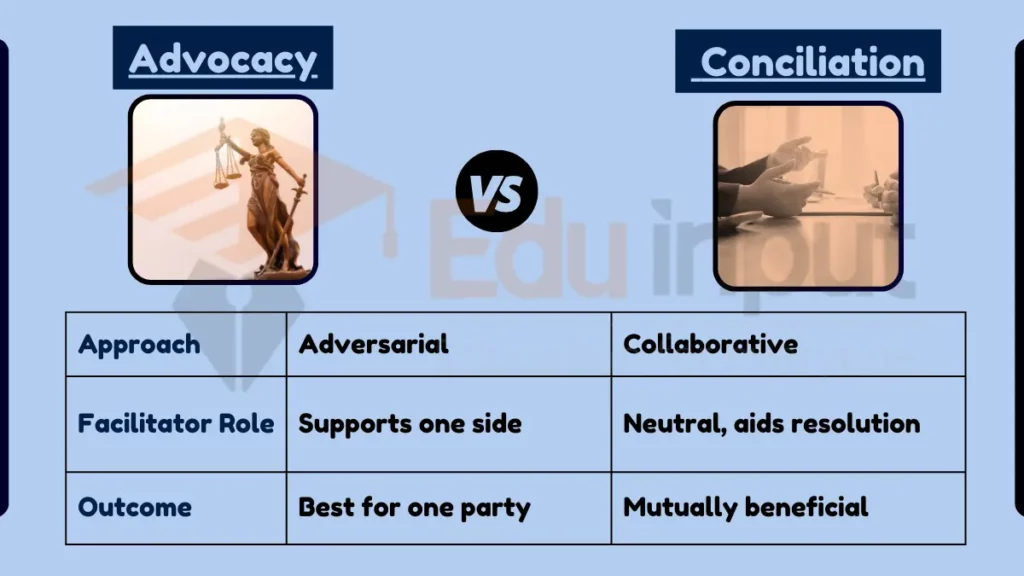
Conciliation, on the other hand, is a more collaborative approach where a neutral third party helps to resolve disputes by finding common ground and facilitating a mutually acceptable agreement between the involved parties.
Comparative Analysis
- Approach:
- Advocacy: Often adversarial, defending one side’s interests.
- Conciliation: Collaborative, seeking mutual agreement.
- Role of the Facilitator:
- Advocacy: Facilitator (advocate) supports one party.
- Conciliation: Neutral third party aids in dispute resolution.
- Outcome Focus:
- Advocacy: Aims for the best outcome for one party.
- Conciliation: Seeks mutually beneficial solutions.
Table Summary
| Feature | Advocacy | Conciliation |
|---|---|---|
| Approach | Adversarial | Collaborative |
| Facilitator Role | Supports one side | Neutral, aids resolution |
| Outcome | Best for one party | Mutually beneficial |
While advocacy focuses on defending one party’s rights or interests, conciliation aims for a harmonious resolution, highlighting the difference in their methodologies and end goals in conflict resolution.


Leave a Reply