
Difference Between Factor V and Factor V Leiden
December 23, 2023  written by Sidra Batool
written by Sidra Batool Table of Contents
Key Difference
Factor V and Factor V Leiden are related to blood clotting, but they have distinct roles and implications. Factor V is a normal blood clotting protein essential for the coagulation process. Factor V Leiden, however, is a specific genetic mutation in the Factor V gene, which leads to an increased risk of developing abnormal blood clots.
Comparative Analysis
- Function in Blood Clotting:
- Factor V: A normal protein that plays a crucial role in the clotting cascade.
- Factor V Leiden: A mutation that leads to increased clotting risk.
- Genetic Aspect:
- Factor V: Normal gene without mutation.
- Factor V Leiden: Specific genetic mutation in the Factor V gene.
- Health Implications:
- Factor V: Essential for normal clotting.
- Factor V Leiden: Associated with a higher risk of thrombosis.
- Prevalence:
- Factor V: Common in the general population.
- Factor V Leiden: More common in certain populations, like those of European descent.
- Diagnosis and Management:
- Factor V: Not typically a focus of diagnosis.
- Factor V Leiden: Diagnosed through genetic testing, often requires management to prevent clotting disorders.
Table Summary
| Feature | Factor V | Factor V Leiden |
|---|---|---|
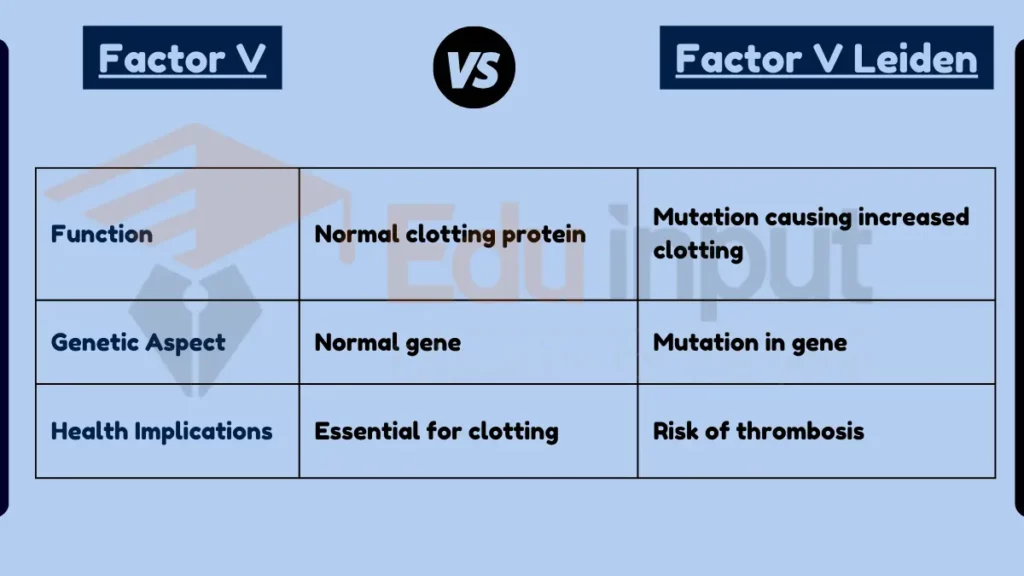
| Function | Normal clotting protein | Mutation causing increased clotting |
| Genetic Aspect | Normal gene | Mutation in gene |
| Health Implications | Essential for clotting | Risk of thrombosis |
| Prevalence | General population | More common in certain ethnic groups |
| Management | Not an issue | Preventative measures for clotting |
Factor V is a standard component of the blood clotting process, while Factor V Leiden is a genetic mutation of this factor, significantly affecting blood clotting and increasing the risk of thrombotic events.
File Under:



Leave a Reply