
Learning by Doing: Horse Training as an Educational Model
 written by Sidra Batool
Horse training doesn’t start with a step-by-step guide or theory-heavy introductions. It starts with action. You do something, the horse responds, and you adjust. No template will help you become a better horse trainer; you just learn things the hard way.
Racehorse trainers develop a loop, and they stick with it. It’s simple on the surface, yet it’s one of the most effective learning systems you’ll ever see. After all, trainers are now able to teach horses how to behave on the racetrack, how to achieve their top speed, and how to react to big crowds. All without speaking to them.
Clearly, we can use the same horse training system as an educational model to make knowledge transfer more efficient, right?
Let’s dive deeper and find out how training works in the equestrian world and how we can apply it to everyday life.
Understanding Comes After Experience, Not Before
In horse training, nobody expects a horse to “understand” a particular concept before experiencing it. You cannot explain pressure and release; you demonstrate it. The horse then feels it, reacts to it, and slowly builds understanding through repetition.
When you think about it, education works the same way. People often struggle when they’re asked to absorb information before using it. Horse training flips that order, and we should do the same with every task we face. Or at least have the same mentality.
There is a certain unavoidable point where we do things at first. Racehorses always have a first race, right? If you are a professional bettor, you know the rule of not betting on the horse that’s running its first race. Why? Well, because the horse doesn’t really know how to react and still hasn’t developed its racing skills.
This is a rule that many professional horse handicappers follow, and it’s a rule that avoids unnecessary risk, no matter the horse’s training potential and results. If you are someone who frequently places bets on horse racing, and you have this skill, maybe you should consider joining TwinSpires horse betting tournaments.
After all, this system isn’t tied only to racehorse training. Horse racing bettors have the same learning curve. They place bets; They get some of them right and some of them wrong, but the goal here is to learn through the experience.
Doing things creates a reference point, and without it, learning floats.
Feedback Is Crucial
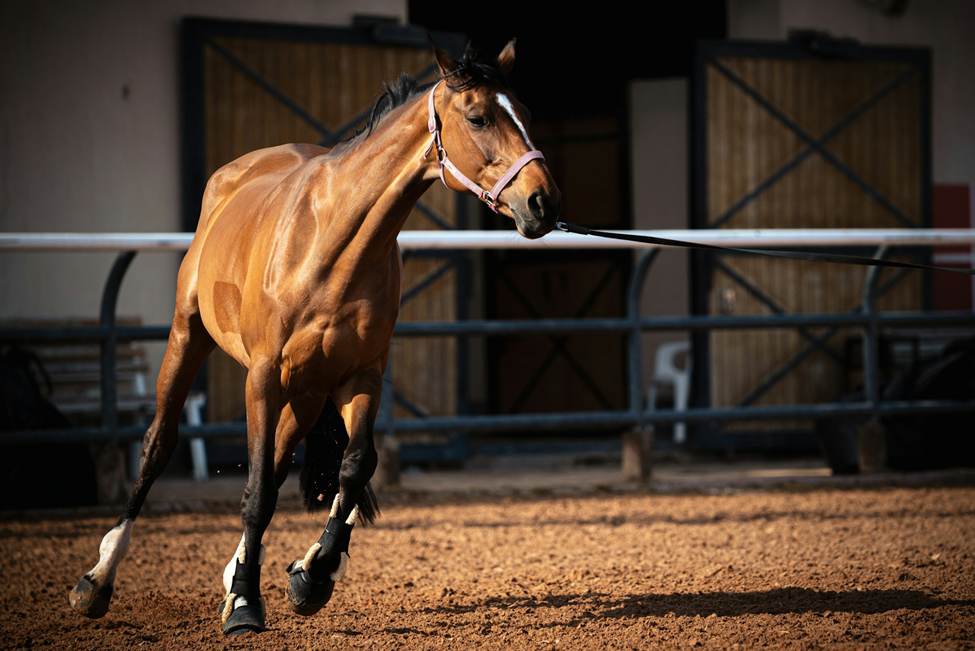
One of the most crucial aspects of horse training is how quickly feedback arrives. You apply a cue. The horse responds or doesn’t. There is no delay, and the data isn’t filtered through long evaluations. It’s instant, honest, and clear.
That’s why learning is so efficient. In traditional education, feedback often comes too late to matter. You’ve already forgotten the subject you were learning, as the results came in a few months after. You can still learn from the feedback, but it is not as efficient as seeing the results immediately.
Mistakes Are Information, Not Failure
Horse trainers get things wrong; there is no doubt about that. And even horses make “mistakes.” But they are never punished for that, like in traditional classrooms. A missed response or a failed result should always be treated as data.
Then the trainer adjusts timing, feeding, clarity, or pressure and tries again. Repetition after adjustment.
When mistakes are framed as feedback, experimentation becomes safe. This is the time when learning speeds up, and confidence starts to grow. So, if you want to build an educational model, make sure not to “punish” failure. It should reward the curious and offer feedback as data, not as a way to make things worse.
Repetition Builds Skill Without Boredom
Horse training uses repetition, but not mindless repetition.
Short sessions. Clear goals. Slight variations. Enough consistency to build muscle memory, but enough change to keep attention engaged.
This balance is hard to get right in classrooms, but it’s central to how horses learn. Too much variation creates confusion. Too much repetition creates disengagement.
Good training lies in the middle. That’s where skill settles in naturally.
The Teacher Adapts to the Learner
If you ask a horse trainer what their training regime is, they’ll all tell you the same thing: it’s different with every horse. Why? Well, because the teacher needs to adapt to the learner. No two horses learn at the same pace, and good trainers know how to build a system that adjusts based on personalities.
This flexibility makes learning more efficient. In traditional educational centers, most students face the same issues and the same guidebooks, and they follow the same pace. This is wrong. When the teacher adapts to the learner’s response instead of forcing uniform progress, understanding deepens, frustration drops, and learning becomes more efficient.
Progress Is Measured Over Time, Not Moments
Horse training doesn’t expect perfection in a single session. Progress is tracked over weeks, not minutes.
One good response doesn’t mean the lesson is learned. One bad session doesn’t mean it failed. What matters is the pattern.
That long view removes pressure from learning.
Education benefits from the same perspective. When learning is treated as a process instead of a performance, people stay engaged longer and learn more deeply.
Horse training has been around for centuries, and the system hasn’t changed much. This means that it’s effective, and we can learn a lot from it. It focuses on a few core things, such as experience first, immediate feedback, safe mistakes, and repetition.
So, if you are building an educational system, try to implement these things; you’ll be amazed at how well they work.


Leave a Reply