
Real-World Examples of Magnetism
 written by Sidra Batool
Magnetism is one of the most fascinating and widely used forces in nature. From holding notes on your refrigerator to powering futuristic transportation systems, magnets are essential to both daily life and cutting-edge innovation. To explore the scope of magnetism’s impact, we’ve organized real-world applications into five categories:
- Household Applications
- Technological Devices
- Medical Applications
- Navigation and Orientation
- Industrial and Miscellaneous Uses
Each example explains how magnetism is applied, what types of magnets are involved, and why it matters.
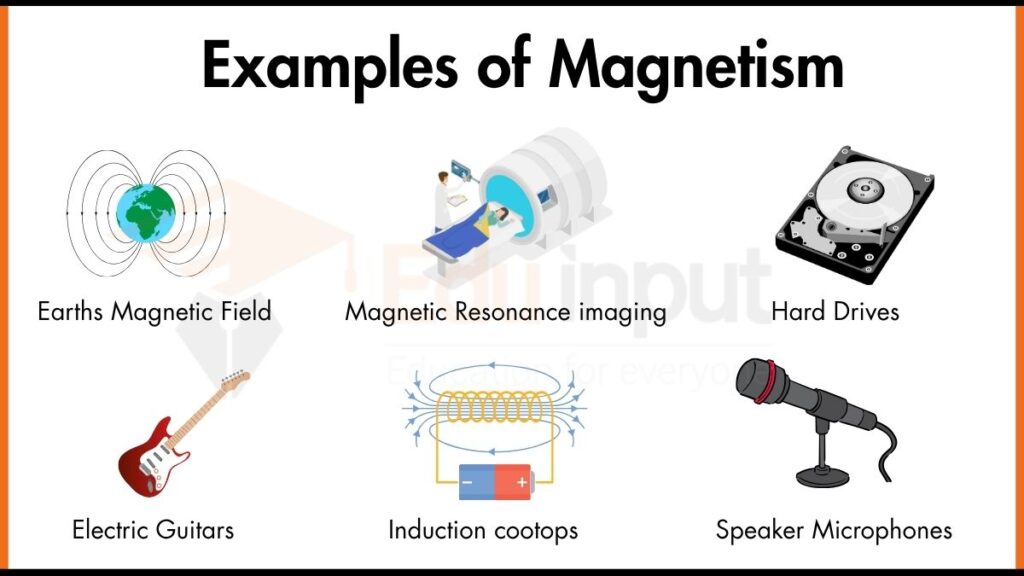
Household Applications
1. Refrigerator Magnets
Refrigerator magnets are usually made of ferrite (ceramic) magnets, which are inexpensive and have enough magnetic force to cling to the iron-based surface of a fridge. These permanent magnets attract the metal surface, allowing you to hold notes, lists, or photos in place. It’s a simple but powerful demonstration of magnetic attraction.
2. Refrigerator Door Seals
Flexible magnetic strips are embedded in refrigerator door seals to ensure a tight closure. These magnets attract the metallic surface of the fridge body, maintaining an airtight seal that keeps the cold air in and food fresh. Without this magnetic feature, refrigerators would waste energy and lose cooling efficiency.
3. Magnetic Whiteboards
Magnetic whiteboards typically have a steel or magnetic backing that allows magnets to stick to the surface. This makes it possible to organize notes, hold erasers, and attach markers using small neodymium or ceramic magnets, often found in homes, classrooms, and offices.
Technological Devices
4. Speakers and Headphones
Inside most audio devices, permanent magnets (usually neodymium) interact with electromagnets (voice coils) to produce vibrations in a diaphragm. These vibrations generate sound waves. The stronger the magnet, the more efficient and accurate the sound production—critical in everything from phone speakers to concert equipment.
5. Electric Motors and Generators
Electric motors convert electrical energy into motion using magnetic fields generated by coils and permanent magnets. Conversely, generators use motion (like a spinning turbine) to create electricity via electromagnetic induction. Motors are found in fans, appliances, and vehicles, while generators are central to power plants.
6. Cordless Power Tools
Modern cordless tools such as drills often use brushless DC motors with powerful neodymium magnets. These motors reduce friction, increase lifespan, and improve energy efficiency—making tools lighter, more powerful, and more reliable.
7. Credit Card Magnetic Strips
Magnetic stripes on credit and debit cards store encrypted data in the form of tiny magnetized particles. When swiped, a reader detects the magnetic field variations and decodes your card’s information. This is an example of magnetic data encoding, still used widely despite the rise of chips and contactless payment.
3. Medical Applications
8. Magnetic Resonance Imaging (MRI)
MRI machines use superconducting electromagnets to create powerful magnetic fields—usually between 1.5 to 3 Tesla. These fields align hydrogen atoms in the body. When the magnetic field is turned off, the atoms return to their original state, releasing energy that’s used to create detailed internal images. It’s a vital, non-invasive tool for diagnosing diseases and injuries.
9. Magnetic Therapy Devices
Some therapeutic devices, such as magnetic bracelets or patches, claim to relieve pain or improve circulation using static magnetic fields. While their effectiveness is debated, many people use them for arthritis, back pain, and joint issues. These use low-strength permanent magnets, typically made of ferrite or neodymium.
Navigation and Orientation
10. Compasses
Compasses use a magnetized needle that aligns with Earth’s magnetic field, pointing toward the magnetic north. This principle, known for centuries, is still widely used in outdoor navigation, emergency kits, and even in aviation and marine instruments.
11. Smartphone Navigation Sensors
Modern smartphones use magnetometers, which are tiny sensors that detect magnetic fields. These are essential for compass apps, augmented reality, and GPS orientation. They allow your phone to determine its direction and movement by measuring fluctuations in the Earth’s magnetic field.
Industrial and Miscellaneous Uses
12. Magnetic Pickup Tools
In workshops or garages, magnetic pickup tools are used to retrieve screws, bolts, or metal fragments that fall into hard-to-reach places. These tools use strong neodymium magnets to attract ferrous metals quickly and efficiently, saving time and effort in repairs.
13. Magnetic Stud Finders
These devices help detect nails or screws in wooden studs behind drywall. By sensing the magnetic fields of the metal fasteners, they identify stud locations, helping with accurate drilling or mounting without damaging walls.
14. Magnetic Jewelry Clasps
Jewelry clasps often use tiny permanent magnets for secure and easy fastening. They provide a convenient solution for people who may have difficulty using traditional clasps, blending fashion with magnetic function.
15. Maglev Trains
Magnetic levitation (Maglev) trains use electromagnets to lift and propel the train above the track, reducing friction drastically. These high-speed trains, found in Japan and China, can reach speeds over 375 mph, representing a futuristic application of magnetism in transportation.
16. Recycling and Waste Sorting
In recycling facilities, large industrial magnets are used to separate ferrous metals (like iron and steel) from other waste. These magnetic separators help automate the sorting process, contributing to more efficient and environmentally-friendly recycling practices.


Leave a Reply