
Chipmunk | Tamias – Classification, Appearance, Habitat, and Facts
October 24, 2023  written by Sidra Batool
written by Sidra BatoolChipmunks are small, striped rodents belonging to the squirrel family. They are known for their energetic behavior and distinctive appearance.
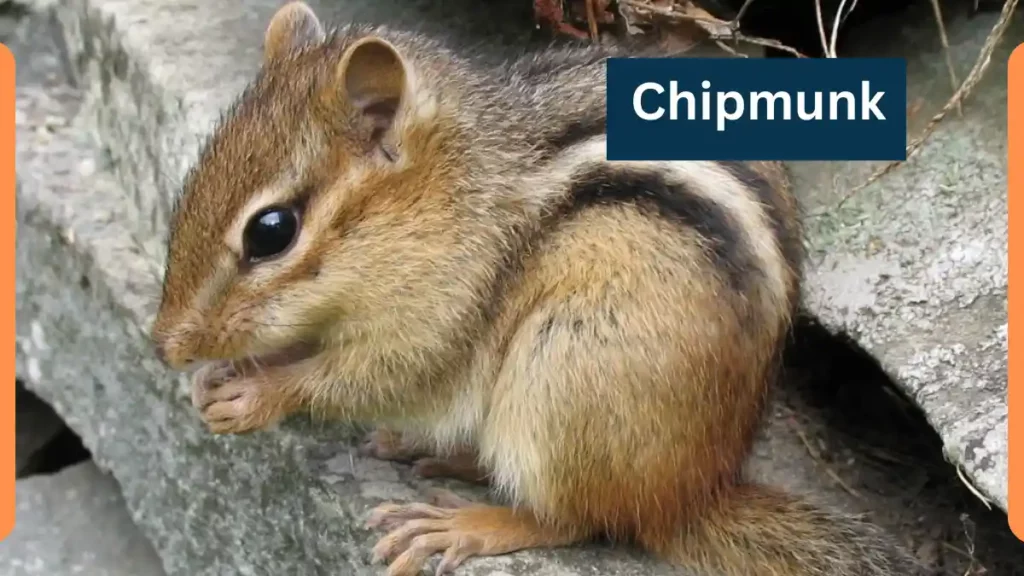
Chipmunk
Here’s some information about chipmunks:
| Topic | Information |
| Scientific Classification | – Kingdom: Animalia |
| – Phylum: Chordata | |
| – Class: Mammalia | |
| – Order: Rodentia | |
| – Family: Sciuridae | |
| – Genus: Tamias | |
| Physical Appearance | Size: Chipmunks are small rodents, typically measuring about 5 to 6 inches (13 to 15 centimeters) in length, with their tails adding an additional 3 to 4 inches (7 to 10 centimeters). |
| Coat: They have a striped pattern on their fur, with alternating stripes of light and dark colors running along their back. | |
| Distribution and Habitat | Chipmunks are native to North America and are found in a variety of habitats, including forests, grasslands, and urban areas. |
| Behavior and Lifestyle | Energetic: Chipmunks are known for their high energy levels and are often seen scurrying about, collecting and storing food. |
| Omnivorous: They have an omnivorous diet, feeding on a wide range of items, including seeds, nuts, fruits, insects, and even small vertebrates. | |
| Reproduction and Life Cycles | Chipmunks breed in the spring and summer, with females giving birth to litters of typically 4 to 5 pups after a gestation period of about 30 days. |
| Predators and Threats | Chipmunks have several natural predators, including hawks, owls, snakes, and domestic cats. They may also face threats from habitat loss and disease. |
| Interesting Facts and Features | Cheek Pouches: Chipmunks have expandable cheek pouches that they use to carry food, which they later store in burrows. |
| Nocturnal Behavior: While chipmunks are primarily diurnal, they may be active at dawn and dusk and sometimes exhibit nocturnal behavior. | |
| Relationship with Humans | Chipmunks are generally considered cute and entertaining wildlife. They are also admired for their role in seed dispersal in ecosystems. |
| Conservation Status and Life Today | Chipmunks are not considered endangered, and they are commonly found in North American ecosystems. They adapt well to various environments, including suburban areas. |
This table provides a concise overview of chipmunks, small striped rodents known for their energetic behavior and distinctive appearance. They play an important role in their ecosystems and are a common sight in North American landscapes.
File Under:




Leave a Reply