
What is Neurotransmitters – Types, Functions, and Classification
 written by Iza
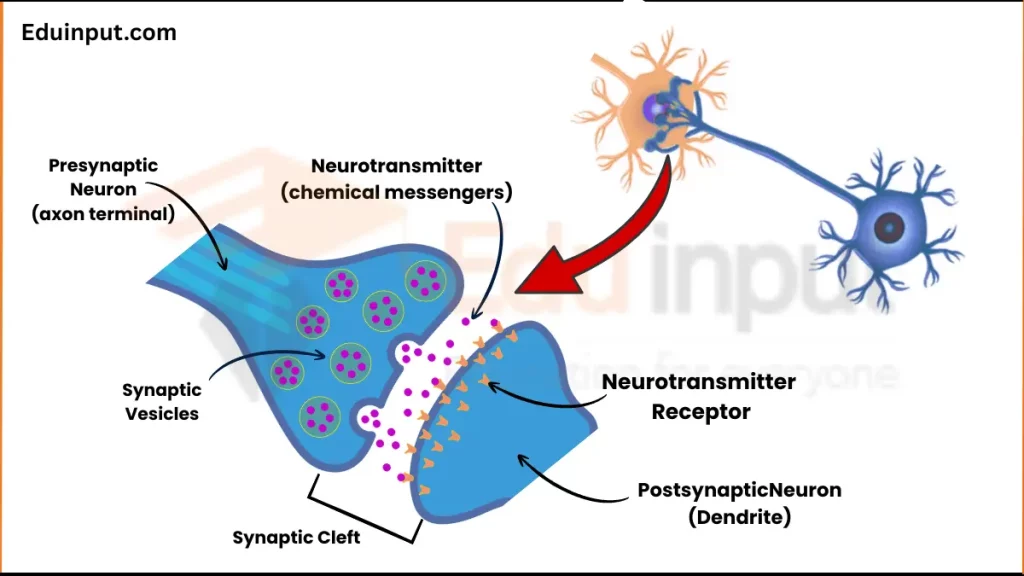
Neurotransmitters are important chemical messengers in the brain. These chemical messengers carry signals between nerve cells, which are called neurons. These neurons do not touch each other. A small gap is present between these neurons called a synapse. Therefore, these chemical messengers act as a bridge between neurons.
A synapse is a small space between two nerve cells (neurons). It acts as a junction point between two neurons. It allows communication between neurons. Neurotransmitters cross this gap to pass messages to other neurons. Without synapses, neurons cannot communicate with each other. This means the brain would stop working properly.
How Neurotransmitters Work?
The working of neurotransmitters follows a step-by-step process.
1. Resting State of Neuron
A neuron stays resting before any signal starts. In this state, the inside of the neuron is negative, and the outside is positive. This charge difference prepares the neuron to send a signal when needed.
2. Action Potential (Signal Generation)
When a stimulus like touch, light, or a thought occurs, it creates an electrical signal. This signal is called an action potential. It starts in the neuron and travels quickly down a long fiber called the axon.
3. Arrival at Axon Terminal
The electrical signal reaches the end of the neuron, known as the axon terminal. At this point, the signal changes from electrical form to chemical form.
4. Release of Neurotransmitters
When the signal reaches the end of the nerve cell, it opens tiny “gates” called calcium channels. This allows calcium to enter the cell. The calcium then pushes small storage sacs, called vesicles, toward the edge of the cell. These sacs open up and pour their neurotransmitters out into the gap, known as the synapse, to carry the message to the next cell.
5. Transmission Across Synapse
The synapse is a small gap between two neurons. Neurotransmitters move across this gap very quickly by diffusion to reach the next neuron.
6. Binding to Receptors
Neurotransmitters attach to specific receptors on the surface of the next neuron. Each neurotransmitter fits its receptor as a key fits into a lock. This binding creates a response in the receiving neuron.
7. Excitatory or Inhibitory Response
After binding, the neurotransmitter can produce two types of effects. It may excite the neuron and start a new signal, or it may inhibit the neuron and reduce or stop the signal.
8. Removal of Neurotransmitters
After the message passes, neurotransmitters are removed from the synapse. They are either broken down or taken back into the neuron. This step is important to stop the signal.
9. Reset and Ready State
Finally, the neuron returns to its resting state. It becomes ready to send another signal. This continuous process helps the brain and body communicate quickly and efficiently.
Types of Neurotransmitters
Neurotransmitters are grouped into three main types based on how they affect brain signals. Each type has a different role in controlling how neurons communicate.
1. Excitatory Neurotransmitters
Excitatory neurotransmitters increase the activity of neurons. These neurotransmitters make the receiving neurons more likely to generate a new signal. These neurotransmitters play an important role in functions such as learning, thinking, and memory. However, too much excitatory activity can lead to overstimulation of the brain.
Example: Examples of Excitatory neurotransmitters include glutamate, epinephrine, and norepinephrine.
2. Inhibitory Neurotransmitters
Inhibitory Neurotransmitters reduce brain activity. These neurotransmitters make the receiving neurons less likely to send a signal. It means inhibitory neurotransmitters reduce or slow down nerve impulses. These neurotransmitters are important for controlling and preventing excessive brain activity. A lack of inhibition may result in increased nervous activity.
Example: GABA (Gamma-aminobutyric acid), glycine, and serotonin are examples of inhibitory neurotransmitters.
3. Modulatory Neurotransmitters
Modulatory Neurotransmitters do not directly excite or inhibit the neurons. These neurotransmitters regulate the overall neuronal activity. They adjust how signals are sent between neurons.
They often affect many neurons at the same time. Their effects are slower but longer-lasting. These neurotransmitters play an important role in mood, behavior, motivation, and emotional control
Examples: Examples of modulatory neurotransmitters include dopamine.
Classification of Neurotransmitters (Based on Chemical Structure)
Neurotransmitters can be grouped based on their chemical structure.
1. Amino Acid Neurotransmitters
Amino acid neurotransmitters are the most common type in the brain. These neurotransmitters control fast communication between neurons. They play a major role in learning, memory, and thinking. A proper balance of these neurotransmitters is necessary for normal brain function.
2. Peptide Neurotransmitters
Peptide neurotransmitters are made from short chains of amino acids. They are larger and more complex than amino acid neurotransmitters. These neurotransmitters usually act more slowly, but their effects last longer.
They are mainly involved in controlling pain, emotions, and social bonding.
3. Monoamine Neurotransmitters
Monoamine neurotransmitters are very important for mood and mental health. They are involved in emotional regulation and brain activity. They affect alertness, motivation, and feelings. Any imbalance in monoamines can lead to mental health problems such as depression.
4. Purine Neurotransmitters
Purine neurotransmitters help control energy levels and sleep patterns. They also support communication between cells in the nervous system. These neurotransmitters play a role in relaxation and brain activity. They are also involved in important cellular processes in the brain.
5. Gas Neurotransmitters
Gas neurotransmitters are different from other types because they exist in gaseous form. They are not stored in vesicles like other neurotransmitters.
They move freely across cell membranes. This allows them to act quickly and affect nearby cells. They help control blood flow and relax muscles.
6. Acetylcholine
Acetylcholine has unique properties because it works in both the central and peripheral nervous systems. It plays an important role in muscle movement. This neurotransmitter is essential for both brain function and body movement.
Functions of Neurotransmitters
Neurotransmitters perform many important functions in daily life:
- Control mood and emotions
- Help in learning and memory
- Regulate the sleep and wake cycle
- Control muscle movement
- Manage stress and fear
- Affect attention and focus
- Help in decision-making
Without these neurotransmitters, the brain cannot send signals.
Key Factors Impacting Neurotransmitter Function
Neurotransmitters play a central role in regulating mood, focus, and energy levels. The functioning of the neurotransmitters depends on a delicate balance involving production, release, receptor activity, and reuptake. This balance can be disrupted by a range of biological, environmental, and lifestyle factors.
When these systems are affected, neurotransmitters may become overactive, insufficient, or improperly utilized, contributing to mental and emotional health challenges.
1. Nutritional Status and Diet Quality
The body requires specific amino acids and micronutrients to produce neurotransmitters effectively. For example, tryptophan supports serotonin production, while tyrosine is essential for dopamine. Deficiencies in B vitamins, iron, magnesium, and omega-3 fatty acids can affect neurotransmitter synthesis and function. A poor diet can reduce their production.
2. Sleep Patterns and Circadian Rhythm
Adequate sleep is important for maintaining neurotransmitter balance. Poor sleep quality disrupts the regulation of serotonin, dopamine, and GABA, leading to impaired concentration and mood instability. Lack of sleep disturbs brain signals. Good sleep improves memory and mood.
3. Stress
Chronic or long-term stress can lower the levels of essential neurotransmitters such as serotonin and dopamine. This imbalance may negatively affect mood, emotional stability, and mental well-being. This imbalance can lead to anxiety, mental fatigue, and depression.
4. Exercise
Regular physical activity helps boost the production of important neurotransmitters like dopamine and serotonin. These brain chemicals improve mood, enhance focus, reduce stress, and enhance overall mental health.
5. Lifestyle Habits
Daily habits such as sleep patterns, diet, and social interaction have a direct effect on brain health and neurotransmitter function. Positive lifestyle choices help maintain neurotransmitter balance.
6. Substance Use and Medication Effects
Alcohol, drugs, caffeine, and certain medications can alter neurotransmitter levels by affecting their release, breakdown, or reuptake. While some medications are designed to correct imbalances, misuse or long-term exposure to substances can disrupt normal brain chemistry.
7. Genetic and Biological Factors
Genetic variations can influence how neurotransmitters are produced, transported, and received in the brain. These differences may increase susceptibility to conditions such as depression, anxiety, or attention-related disorders.
8. Inflammation and Immune Response
Chronic inflammation leads to the release of cytokines, which can interfere with neurotransmitter metabolism. This is particularly evident in pathways involving serotonin and glutamate, potentially affecting mood and cognitive function.
If these factors are not balanced, they can lead to mood problems, stress, and other health issues
FAQs
What are neurotransmitters?
Neurotransmitters are chemical messengers in the nervous system. These chemicals control communication between brain cells and body functions. These are the signalling molecules secreted by a neuron to excite or inhibit the other neuron across a synapse.
What releases neurotransmitters in the nervous system?
Neurotransmitters are released by neurons (nerve cells). These chemicals are stored in small sacs called synaptic vesicles located in the axon terminal (end of the neuron).
When an electrical signal (nerve impulse) reaches the axon terminal, these vesicles fuse with the membrane and release neurotransmitters into the synaptic cleft (the gap between two neurons).
What do neurotransmitters do in the body?
They control many functions such as mood, memory, learning, sleep, and muscle movement. They help the brain communicate with the body.
What happens when neurotransmitters are imbalanced?
Imbalance can cause problems like anxiety, depression, sleep issues, and memory problems. It can also lead to serious diseases.
Which neurotransmitter is responsible for happiness?
Dopamine, serotonin, and endorphins are linked to happiness and pleasure. They help improve mood and emotional well-being.
How do drugs affect neurotransmitters?
Some drugs increase neurotransmitter activity, while others block it. These medicines are used to treat mental health and brain disorders.

