
Difference Between Aerobic and Anaerobic Respiration
 written by Sidra Batool
The difference between aerobic and anaerobic respiration is in oxygen use, energy production, and glucose breakdown.
Both are biological processes used by cells to make ATP (energy).
Aerobic respiration uses oxygen (O2) and releases a large amount of ATP. Anaerobic respiration works without oxygen and releases very little ATP.
Both processes begin with glycolysis in the cytoplasm. Only aerobic respiration continues inside the mitochondria.
This difference explains why muscles use anaerobic respiration during heavy exercise and why aerobic metabolism is more efficient.
What are the 2 types of cellular respiration?
A. Aerobic and anaerobic
B. Photosynthesis and respiration
C. Aerobic and digestion
D. Fermentation and diffusion
Answer: A
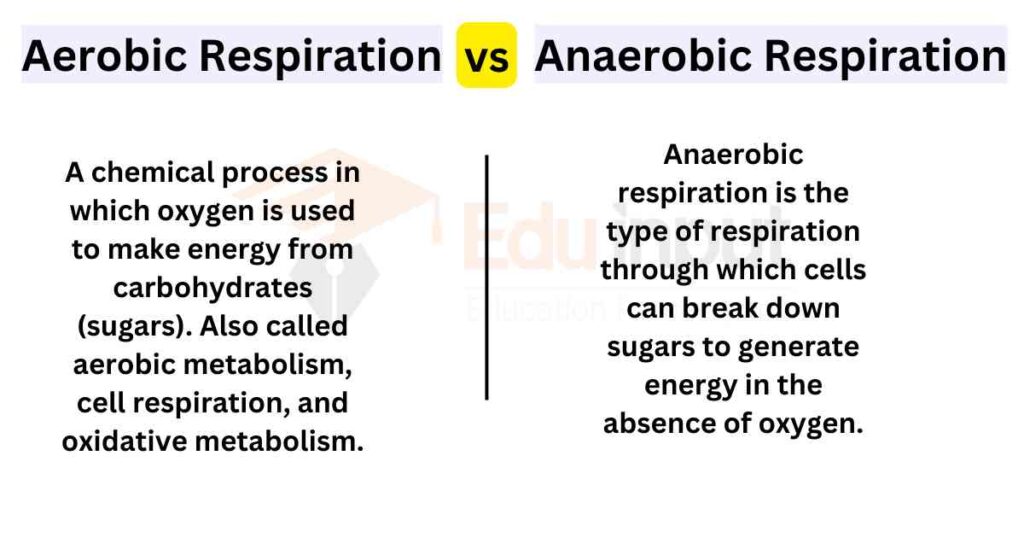
What Is the Main Difference Between Aerobic and Anaerobic Respiration?
The main difference between aerobic and anaerobic respiration is oxygen involvement.
- Aerobic respiration is the process of producing cellular energy using oxygen
- Anaerobic respiration is the process of producing cellular energy without oxygen
This single difference changes:
- How glucose is broken down,
- How much ATP is produced,
- And what byproducts are released.
How Is Anaerobic Respiration Different From Aerobic Respiration at the Cellular Level?
Both processes begin with glycolysis, the initial stage of glucose breakdown that occurs in the cytoplasm.
After that, the pathways diverge:
- In aerobic respiration, glucose breakdown continues inside the mitochondria
- In anaerobic respiration, glucose breakdown stops after glycolysis
Because of this:
- Aerobic respiration completes glucose breakdown
- Anaerobic respiration results in incomplete glucose breakdown
- This difference directly affects energy output.
What is the main difference between aerobic and anaerobic respiration?
A. Site of respiration
B. Oxygen requirement
C. Type of glucose
D. Temperature
Answer: B
Difference between Aerobic and Anaerobic Respiration
This Comparison table helps you to distinguish between aerobic and anaerobic respiration clearly.
Comparison of Aerobic and Anaerobic Respiration
| Difference Factor | Aerobic Respiration | Anaerobic Respiration |
| Oxygen Requirement | Requires oxygen ($O_2$) | Occurs without oxygen |
| Type of Respiration | Aerobic metabolism | Anaerobic metabolism/fermentation |
| Glucose Breakdown | Complete glucose breakdown | Incomplete glucose breakdown |
| ATP Yield | High energy output (30–38 ATP) | Low energy output (2 ATP) |
| Byproducts Formed | Carbon dioxide ($CO_2$) and water ($H_2O$) | Lactic acid (animals) or ethanol + $CO_2$ (yeast/plants) |
| Site of Process | Cytoplasm (glycolysis) → mitochondria | Cytoplasm only |
| Efficiency | More efficient respiration | Less efficient respiration |
| Occurs In | Animals, plants, aerobic organisms | Yeast, bacteria, muscle cells |
| Example Process | Aerobic respiration in humans | Fermentation in yeast |
What distinguishes anaerobic respiration from aerobic respiration?
A. Higher ATP production
B. Complete oxidation of glucose
C. Absence of oxygen
D. Use of mitochondria
Answer: C
What Does Anaerobic Respiration Produce Compared to Aerobic Respiration?
Another clear difference between aerobic and anaerobic respiration is the end products.
- Aerobic respiration produces carbon dioxide and water
- Anaerobic respiration produces lactic acid (in humans) or alcohol (in yeast)
These products show why anaerobic respiration is less efficient and can cause muscle fatigue.
Why Is Aerobic Respiration More Efficient Than Anaerobic Respiration?
Aerobic respiration is more efficient because glucose is completely broken down.
Anaerobic respiration stops after glycolysis.
An incomplete breakdown means:
- Less ATP
- Energy remains stored in lactic acid or ethanol
- That is why anaerobic respiration produces less energy.
What Reactants and Products Show the Difference Between Aerobic and Anaerobic Respiration?
The chemical substances involved clearly highlight the difference.
Reactants
- Both: Glucose
- Only aerobic respiration: Oxygen ($O_2$)
Byproducts
- Aerobic respiration: Carbon dioxide ($CO_2$) and water ($H_2O$)
Anaerobic respiration:
- Lactic acid (in animals and muscle cells)
- Ethanol and carbon dioxide (in yeast and plants)
Anaerobic respiration in yeast and plants is a form of fermentation, a specific type of anaerobic metabolism.
Short Notes on Aerobic and Anaerobic Respiration
Aerobic and anaerobic respiration are two types of cellular respiration used to release energy from glucose.
Aerobic respiration occurs in the presence of oxygen. Glucose is completely broken down to form carbon dioxide, water, and a large amount of ATP (30–38 ATP). After glycolysis in the cytoplasm, the process continues in the mitochondria, making it an efficient energy-producing process.
Anaerobic respiration occurs without oxygen. Glucose is only partially broken down, producing lactic acid in animals or ethanol and carbon dioxide in yeast and plants, along with 2 ATP. It takes place entirely in the cytoplasm and is less efficient.
In summary, aerobic respiration releases more energy and requires oxygen, while anaerobic respiration releases less energy and occurs when oxygen is absent.
FAQs
What is the difference between aerobic and anaerobic respiration?
Aerobic respiration uses oxygen and releases more energy, while anaerobic respiration occurs without oxygen and releases less energy.
What are 5 differences between aerobic and anaerobic respiration?
Oxygen use, ATP yield, end products, efficiency, and site of respiration.
When is anaerobic respiration used?
When oxygen supply is insufficient, such as during intense exercise.
What is the difference between fermentation and anaerobic respiration?
Fermentation is a type of anaerobic respiration.
It occurs in yeast, plants, and muscle cells and produces ethanol or lactic acid instead of fully breaking down glucose.
Why does an athlete breathe faster and deeper after finishing a race?
During intense exercise, muscle cells use anaerobic respiration due to low oxygen.
After the race, faster breathing supplies oxygen to remove lactic acid and restore aerobic respiration.




Leave a Reply