
Difference Between Hard Copy And Soft Copy
 written by Sehrish Basharat
The main difference between a soft copy vs hard copy is that a soft copy is an electronic document stored on a computer, while a hard copy is the physical form of a soft copy. This difference between soft copy and hard copy is essential in understanding how documents are stored and used in various contexts.
Hard copy and soft copy meaning can be summed up in this distinction: hard copies are permanent, whereas soft copies are typically stored in a computer or other digital format. Let’s explore the difference between hard copy and soft copy in more detail.
Difference between Soft copy and Hard copy
The difference between soft copy and hard copy is clear. A soft copy is digital, stored on a device, and can be easily modified. A hard copy is a physical print, permanent, and cannot be easily changed.
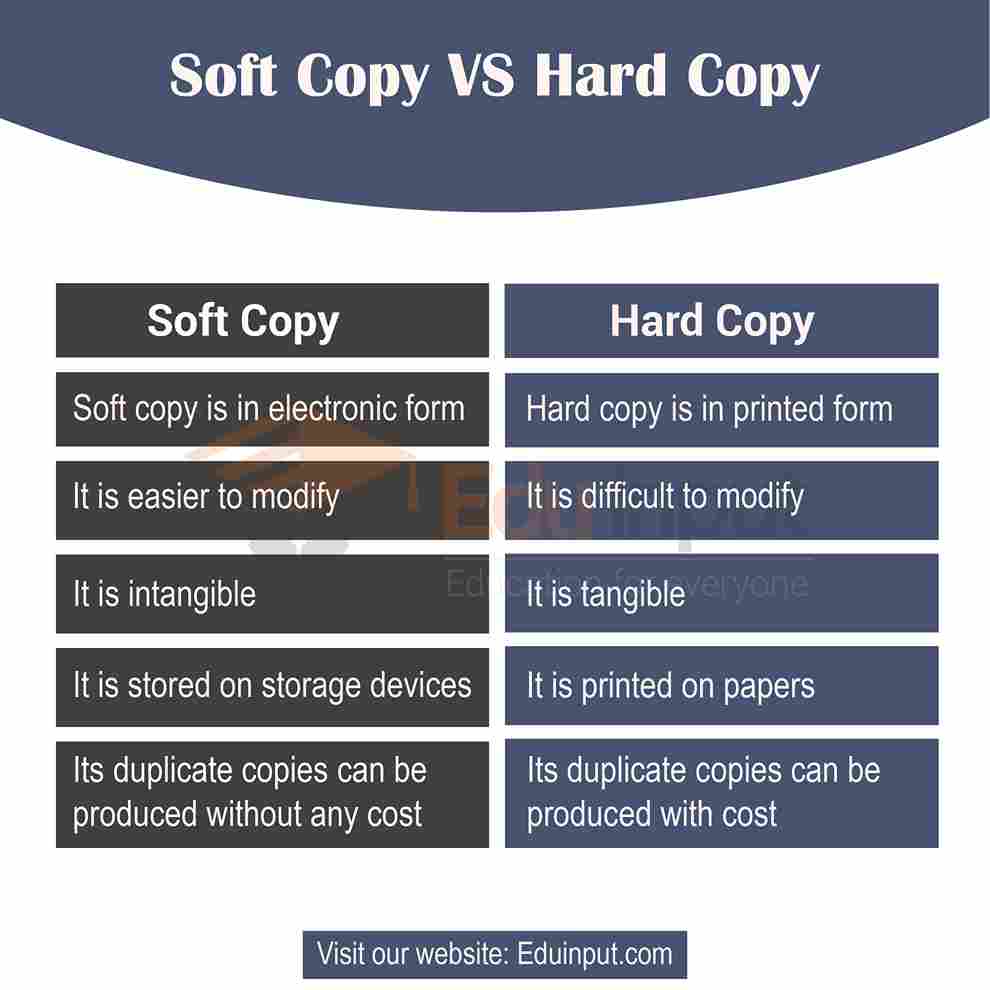
| Soft Copy | Hard Copy |
| A soft copy is in electronic form. | A hard copy is in print form. |
| It is easy to modify. | It is difficult to modify. |
| It is intangible. | It is tangible. |
| It is stored on a storage device. | It is printed on paper. |
| A soft copy document requires specific tools and software for storing, displaying, accessing, and editing. | No specific software is required for storing, displaying, and accessing documents. |
| Its duplicate copies can be produced without any cost. | Its duplicate copies can be produced at cost. |
| A soft copy is an electronic file that can be read and displayed on a computer or other electronic device. | It does not require any physical medium to read and see the data. |
| A soft copy is a temporary copy. | A hard copy is a permanent copy. |
| Although soft copies have no physical weight, they can carry a lot of importance. | It carries some weight in physical form. |
The difference between soft copy and hard copy shows in their format, storage, and usage. A soft copy is more flexible and cheaper to replicate. A hard copy is formal, official, and permanent.
Advantages of Soft Copy Over Hard Copy
Here are key benefits of soft copy over hard copy:
- Easy Editing – Soft copies are much easier to edit compared to hard copies, which require reprinting for any changes.
- Cost-Effective – Soft copies are free to duplicate and store, while hard copies incur printing costs each time a duplicate is needed.
- Space-Saving – Storing soft copies on digital devices or cloud services eliminates the need for physical storage, unlike hard copies, which require physical space.
- Instant Sharing – Sharing soft copies via email or cloud services is instant, whereas hard copies need to be physically delivered or shipped.
- Environmentally Friendly – Soft copies help reduce paper consumption, unlike hard copies, which contribute to paper waste and environmental impact.
- Fast Access – Soft copies can be accessed immediately on digital devices, while hard copies need to be physically retrieved from storage.
- Searchable – Soft copies allow quick searches with keywords, making it faster to find information, whereas hard copies require a manual search.
- Backup and Recovery – Soft copies can be easily backed up on digital platforms, reducing the risk of loss or damage, while hard copies are at risk of being destroyed or damaged.
- Device Compatibility – Soft copies are compatible with a range of digital devices, including phones, tablets, and computers, while hard copies are limited to physical access.





Leave a Reply