
Abiotic Factors in Aquatic Ecosystem
 written by Sidra Batool
An aquatic ecosystem contains both biotic factors and abiotic factors. Biotic factors are the living organisms, such as algae, plankton, fish, and bacteria. Abiotic factors are the non-living physical and chemical conditions, such as water, temperature, dissolved oxygen, pH, salinity, light, and depth.
Together, these biotic and abiotic components of aquatic ecosystems determine how organisms survive, interact, and are distributed in freshwater and marine environments.
Abiotic Factors in Aquatic Ecosystem
Abiotic factors are the non-living conditions that affect aquatic organisms and their habitats.
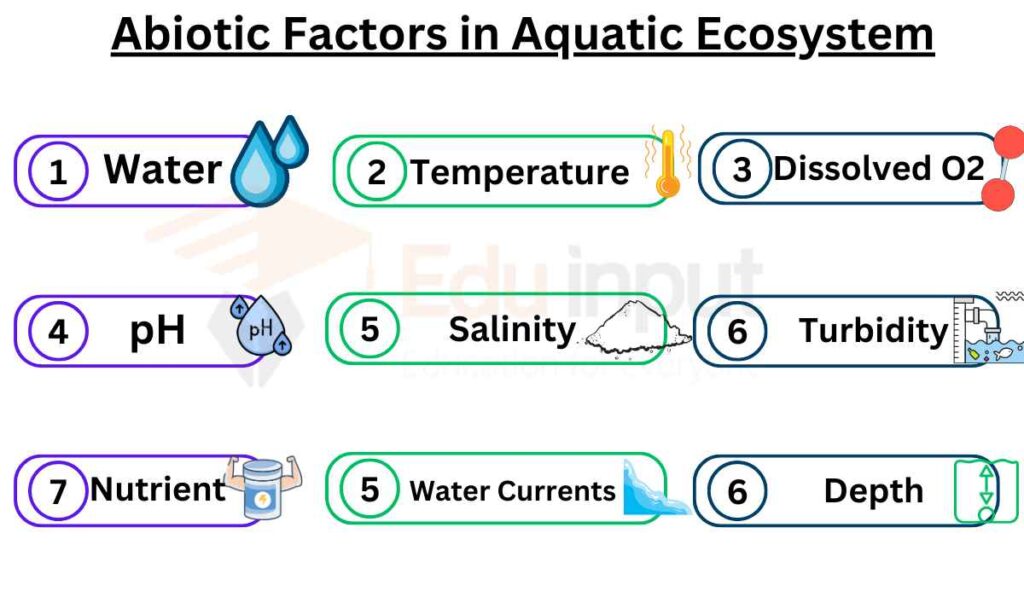
1. Water
Water provides the medium in which aquatic organisms live. It also carries dissolved oxygen, nutrients, and other substances needed by aquatic life.
Ecosystem example: Water is the main habitat in lakes, rivers, ponds, and oceans.
2. Temperature
Temperature affects the metabolic rate, growth, reproduction, and physiological processes of aquatic organisms. Different species have specific temperature ranges in which they can survive.
Ecosystem example: Polar marine ecosystems have much colder water than tropical coral reef ecosystems, supporting different communities of organisms.
3. Dissolved Oxygen
Dissolved oxygen is the oxygen present in water. It is essential for the respiration of most aquatic organisms. Water temperature, turbulence, and aquatic plants can influence oxygen levels.
Ecosystem example: Fast-flowing rivers and streams often have higher dissolved oxygen because moving water increases gas exchange.
4. pH
pH indicates how acidic or alkaline the water is. Aquatic organisms have different pH tolerances, and changes outside their preferred range can affect their survival and physiological processes.
Ecosystem example: Freshwater lakes can have different pH levels depending on surrounding rocks, soil, and water chemistry.
5. Salinity
Salinity is the concentration of dissolved salts in water. It differs among freshwater, brackish, and marine ecosystems. Aquatic organisms vary in their ability to tolerate changes in salinity.
Ecosystem example: Estuaries have changing salinity because freshwater from rivers mixes with saltwater from the sea.
6. Turbidity
Turbidity refers to the cloudiness of water caused by suspended particles. High turbidity can reduce light penetration and affect aquatic plants and other organisms.
Ecosystem example: Rivers carrying sediment after heavy rainfall can become highly turbid.
7. Nutrient Levels
Nutrients such as nitrogen and phosphorus support the growth of aquatic plants and algae. Their availability influences primary productivity and the distribution of organisms.
Ecosystem example: Lakes and ponds depend on nutrients such as nitrogen and phosphorus to support algae and aquatic plants.
8. Water Currents
Water currents affect the movement and distribution of nutrients, oxygen, and organisms. They also influence aquatic habitats and the dispersal of larval organisms.
Ecosystem example: Ocean ecosystems are strongly influenced by currents that transport nutrients and marine organisms.
9. Depth
Water depth affects light penetration, temperature, and pressure. These conditions influence which organisms can survive at different depths.
Ecosystem example: Deep ocean ecosystems receive little or no sunlight and experience much greater pressure than shallow coastal ecosystems.
10. Substrate Composition
The substrate is the material at the bottom of an aquatic habitat, such as sand, mud, or rocks. It provides shelter and attachment surfaces for aquatic organisms.
Ecosystem example: Coral reef ecosystems have hard substrates that provide surfaces for corals and other organisms to attach.
11. Light Availability
Light is essential for photosynthesis in aquatic plants and algae. The amount of available light affects primary productivity, plant growth, and the distribution of organisms.
Ecosystem example: Shallow freshwater ponds receive more sunlight than deep water, allowing submerged plants to grow where sufficient light reaches the bottom.
Biotic Factors in Aquatic Ecosystem
Biotic factors are the living components of an aquatic ecosystem. They include organisms that interact with one another through feeding, competition, predation, decomposition, and other ecological relationships.
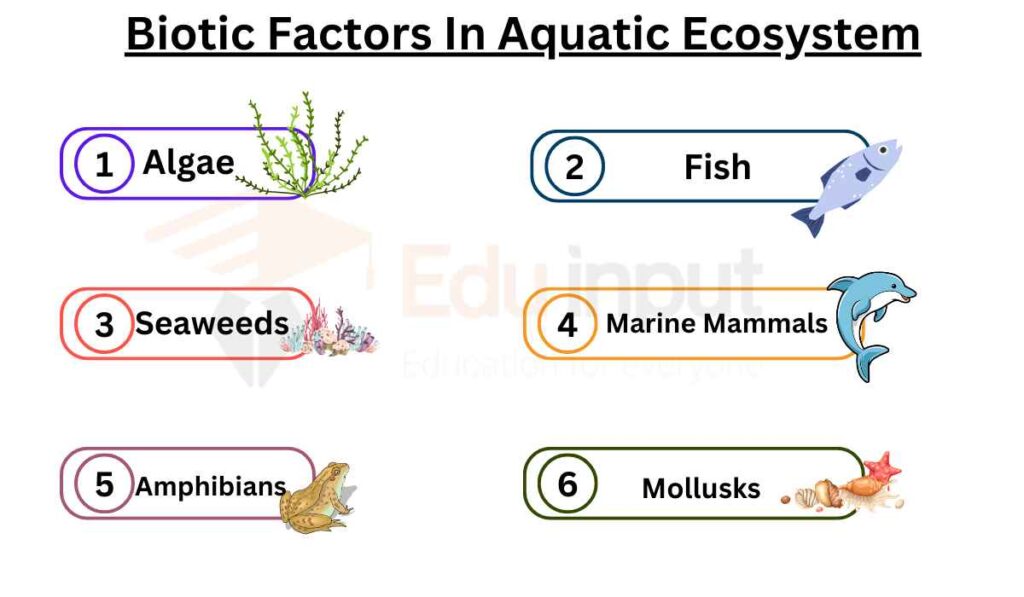
1. Algae
Algae are photosynthetic organisms that form an important base of many aquatic food chains. They provide food and, through photosynthesis, contribute oxygen to the aquatic environment.
Ecosystem example: Freshwater lakes and ponds often contain algae that support zooplankton and other organisms.
2. Plankton
Plankton includes small organisms that drift or float in the water. Phytoplankton are photosynthetic organisms, while zooplankton are microscopic animals. Both are important food sources for aquatic organisms.
Ecosystem example: Open ocean ecosystems contain abundant plankton that support fish and other marine animals.
3. Fish
Fish occupy different ecological niches in aquatic ecosystems. Depending on the species, they may act as predators, herbivores, or scavengers.
Ecosystem example: Freshwater river ecosystems may contain fish that feed on insects, plants, or smaller fish.
4. Seaweeds
Seaweeds, or macroalgae, are large marine algae that provide food, shelter, and habitat for many marine organisms.
Ecosystem example: Rocky coastal ecosystems can support seaweed communities that provide shelter for small marine animals.
5. Corals
Corals are marine invertebrates that form reef structures. Coral reefs provide habitats for many organisms and support high biodiversity.
Ecosystem example: Tropical coral reef ecosystems contain corals that provide habitat for fish, mollusks, and many other marine organisms.
6. Mollusks
Mollusks such as clams, mussels, and snails are aquatic invertebrates. They can contribute to aquatic food webs through feeding and other ecological interactions.
Ecosystem example: Estuarine ecosystems can contain oysters, clams, and other mollusks that live in shallow coastal waters.
7. Marine Mammals
Marine mammals such as seals, whales, and dolphins are important components of marine food webs. They influence interactions among species and nutrient cycling.
Ecosystem example: Polar marine ecosystems support marine mammals such as seals and whales adapted to cold waters.
8. Aquatic Birds
Waterfowl, herons, pelicans, and other aquatic birds interact with aquatic ecosystems by feeding on fish, insects, and other organisms.
Ecosystem example: Wetland ecosystems provide feeding and nesting habitats for herons, ducks, and other aquatic birds.
9. Amphibians
Some amphibians, including frogs and salamanders, spend part of their life cycle in aquatic environments. They contribute to food webs and nutrient cycling.
Ecosystem example: Freshwater ponds provide breeding and larval habitats for frogs and other amphibians.
10. Bacteria
Bacteria are important microorganisms in aquatic ecosystems. They contribute to the decomposition of organic matter, nutrient cycling, and water-quality processes.
Ecosystem example: Lakes and wetlands contain bacteria that decompose organic matter and recycle nutrients.
Biotic and Abiotic Components of Aquatic Ecosystem
The living and non-living components of an aquatic ecosystem constantly interact. Abiotic conditions influence which organisms can survive, while organisms can also modify their physical and chemical environment.
| Biotic components | Example ecosystem | Abiotic components | Example ecosystem |
| Algae | Freshwater lakes | Water | Rivers |
| Plankton | Open ocean | Temperature | Polar marine ecosystems |
| Fish | Rivers | Dissolved oxygen | Fast-flowing streams |
| Seaweeds | Rocky coasts | pH | Freshwater lakes |
| Corals | Coral reefs | Salinity | Estuaries |
| Mollusks | Estuaries | Turbidity | Sediment-rich rivers |
| Marine mammals | Polar seas | Nutrients | Lakes and ponds |
| Aquatic birds | Wetlands | Water currents | Oceans |
| Amphibians | Freshwater ponds | Depth | Deep ocean |
| Bacteria | Lakes and wetlands | Light | Shallow ponds |
Biotic Factors in Marine Ecosystems
Biotic factors in marine ecosystems include algae, plankton, fish, seaweeds, corals, mollusks, marine mammals, aquatic birds, and bacteria.
Examples: Coral reefs, open oceans, rocky coasts, estuaries, and polar seas contain different communities of marine organisms.
How Do Biotic and Abiotic Factors Affect Aquatic Ecosystems?
Abiotic conditions determine which organisms can survive in a particular aquatic habitat, while biotic interactions influence population sizes and community structure.
For example, light availability affects algae and aquatic plants, while temperature and dissolved oxygen influence the organisms that can live in the water. Fish, plankton, algae, bacteria, and other organisms then interact through food webs, competition, predation, and decomposition.


Leave a Reply