
10 Examples of Facultative Mutualism
 written by Sidra Batool
Facultative mutualism happens when two species benefit from interacting. But they can survive without each other. These facultative symbiotic relationships are flexible. Organisms can rely on other sources if needed. Many species use facultative mutualism across ecosystems. This includes forests, grasslands, oceans, and deserts. Some examples of facultative mutualism include pollination, parasite removal, seed dispersal, and nutrient exchange.
Facultative mutualism plays a key role in ecosystems. It increases survival chances for different species. Neither species is completely dependent on the other. They can adapt to environmental changes. They can find alternative sources when necessary. This is different from obligate mutualism. In an example of obligate mutualism, both species must have each other to survive. Lichens are an example of obligate mutualism, the fungus and algae cannot live apart.
Facultative symbiosis also includes other types of relationships. Facultative commensalism means one species benefits. The other is not affected. But both can survive alone. Facultative parasite examples include organisms that can be parasites sometimes. Other times they live freely. An example of facultative parasite is Naegleria fowleri. It usually lives freely in water. But it can sometimes infect humans. These facultative relationship types show how flexible nature can be.
References: [1][2][3][4][5][6][7]
Examples of Facultative Mutualism
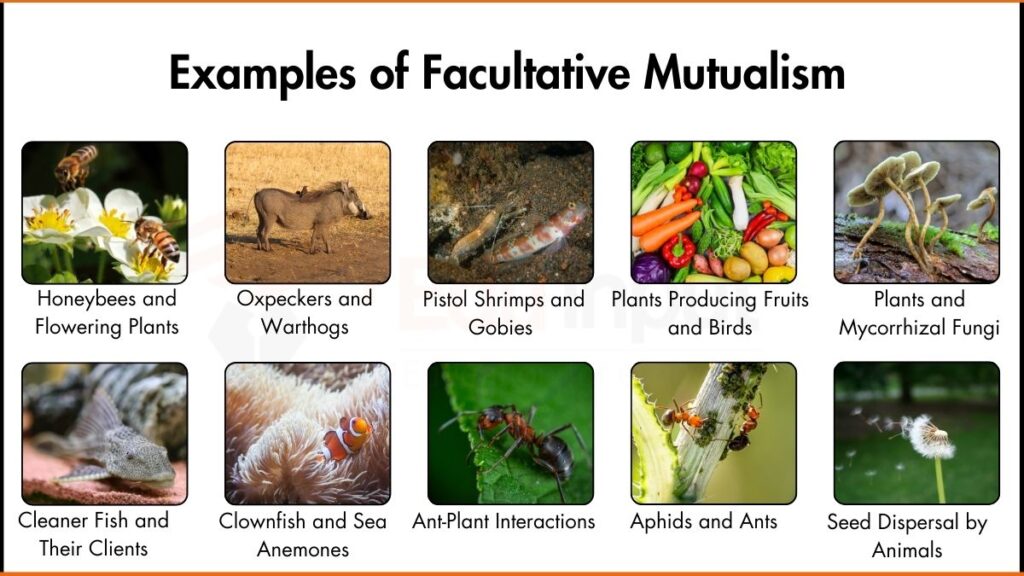
Facultative mutualism gives advantages to both species. But neither depends entirely on the other. Here are 10 examples of mutualism that are facultative:
1. Honeybees and Flowering Plants
Honeybees collect nectar from flowers. They use it as food. While doing this, they move pollen between flowers. This helps plants make seeds. This relationship benefits both species. Plants reproduce. Bees get food. This is a common example of facultative mutualism.
However, this interaction is facultative because bees can get nectar from different plants. Flowers can be pollinated by other insects. Wind can also pollinate flowers. Both can survive without each other. This makes it a good facultative mutualism example.
2. Oxpeckers and Warthogs
Oxpeckers sit on warthogs. They eat parasites from their skin. The birds get a steady food source. The warthogs benefit from parasite removal. This is one of the facultative mutualism examples in African grasslands.
Despite this relationship, warthogs can remove parasites other ways. They can take mud baths. Oxpeckers can find other hosts or food sources. They might eat insects or find other animals. This makes their mutualism facultative rather than required. This example of facultative relationship shows flexibility.
3. Pistol Shrimps and Gobies
Pistol shrimps dig burrows in sandy ocean floors. These burrows create safe shelters. Gobies often share these burrows. They use them for protection from predators. In return, gobies act as lookouts. They warn shrimps of danger. This is an example of facultative mutualism in marine environments.
While both species benefit, they can survive alone. Shrimp can build burrows without gobies. Gobies can find other hiding spots. This flexibility makes it faculative mutualism (also spelled facultative mutualism).
4. Plants Producing Fruits and Birds
Birds eat fruits from plants. They get nutrients. They spread seeds through their droppings. This helps plants grow in new areas. This is a common facultative mutualism example in many ecosystems.
However, birds have other food sources. They can eat insects, worms, or other fruits. Plants can use wind, water, or other animals for seed dispersal. Squirrels, bears, and other animals can spread seeds too. This flexibility makes their interaction facultative mutualism.
5. Plants and Mycorrhizal Fungi
Mycorrhizal fungi live on plant roots. They help plants get nutrients from soil. Plants give carbohydrates to the fungi in return. This relationship helps both grow better. This is one of the important examples of facultative mutualism in forests and grasslands.
However, both organisms can live without each other. Plants can get nutrients from soil on their own. Fungi can survive on dead organic matter. This makes it facultative rather than required. Some plants must have mycorrhizal fungi. Those show example of obligate mutualism instead.
6. Cleaner Fish and Their Clients
Cleaner fish remove parasites from larger fish. They get food this way. The larger fish stay healthy. This benefits both parties. This is an example of facultative mutualism in coral reefs and oceans.
However, neither relies only on this interaction. Larger fish can control parasites other ways. They might rub against rocks or visit cleaning stations with shrimp. Cleaner fish can eat other food sources. They might catch small creatures or eat algae. This makes it a facultative relationship.
7. Clownfish and Sea Anemones
Clownfish live among sea anemones. They get protection from predators. Anemone tentacles sting other fish. But clownfish have special mucus that protects them. In return, clownfish provide nutrients through their waste. They may help clean the anemone. This is a famous facultative mutualism example in the ocean.
However, some clownfish can survive in different places. Some sea anemones thrive without clownfish. Their relationship is helpful but not essential for survival. This is example of facultative symbiosis rather than obligate.
8. Ant-Plant Interactions
Some ants protect plants from plant-eating insects. In exchange, plants give food or shelter. The plants benefit from less damage. Ants get resources. This is an example of facultative mutualism in tropical and temperate regions.
However, ants can find other food sources. They might hunt insects or collect nectar from other plants. Plants can use different defense strategies. They might have thorns, toxic chemicals, or tough leaves. This makes their interaction facultative mutualism.
9. Aphids and Ants
Ants take care of aphids. They collect honeydew from aphids as food. They protect aphids from predators like ladybugs. This benefits both species. This is one of the facultative mutualism examples found in gardens and farms.
Although this helps both species, some aphids can survive without ant protection. Some ants can find food elsewhere. They might hunt other insects or collect plant nectar. This makes their relationship facultative. This is an example of facultative interaction in nature.
10. Seed Dispersal by Animals
Animals eat seeds from plants. They help spread seeds across different areas through their droppings. This benefits plant reproduction. Plants can grow in new locations. Animals get food. This is a widespread example of facultative mutualism.
However, some plants spread seeds through wind or water. Dandelion seeds fly in the wind. Coconuts float in water. Animals can find other food sources. They can eat fruits, insects, or other plants. This makes this relationship facultative mutualism.
Practice Quiz Facultative Mutualism Examples
Q1. Which of the following best defines facultative mutualism?
A) Both species must live together to survive.
B) One species benefits while the other is harmed.
C) Both species benefit but can survive independently.
D) One species benefits while the other is unaffected.
Correct Answer: C. This is a flexible, non-essential interaction where both parties gain an advantage but remain self-sufficient.
Q2. Which of these is a classic example of obligate mutualism rather than facultative?
A) Honeybees and flowers
B) Lichens (fungi and algae)
C) Oxpeckers and warthogs
D) Clownfish and anemones
Correct Answer: B. In lichens, the organisms are so physically and biologically integrated that they cannot live as separate entities.
Q3. Why is the interaction between bees and flowers considered “facultative”?
A) Bees only eat one specific type of nectar.
B) Flowers can be pollinated by wind or other insects.
C) The plants eventually die without the bees.
D) The bees are parasites of the flowers.
Correct Answer: B. The relationship is optional because bees have many food sources and plants have multiple ways to reproduce.
Q4. Which organism serves as a primary example of a facultative parasite?
A) Honeybee
B) Naegleria fowleri
C) Pistol shrimp
D) Clownfish
Correct Answer: B. Naegleria fowleri is “facultative” because it usually lives freely in water but can switch to a parasitic lifestyle if it infects a human.
Q5. What is the defining feature of facultative commensalism?
A) Both species are harmed by the interaction.
B) One benefits, the other is unaffected, and both can survive alone.
C) Both species are required to stay together for reproduction.
D) It only occurs in arctic or desert ecosystems.
Correct Answer: B. It is a one-sided benefit that does not create a life-or-death dependency for either organism.
Q6. In the facultative symbiosis between pistol shrimps and gobies, what is the shrimp’s role?
A) Acting as a lookout for predators.
B) Providing food for the goby.
C) Digging and maintaining a shared burrow.
D) Pollinating marine plants.
Correct Answer: C. The shrimp provides the infrastructure (the home), while the goby provides the security (the lookout).
Q7. Which relationship involves fungi exchanging minerals for plant carbohydrates?
A) Lichens on trees
B) Mycorrhizal fungi and tree roots
C) Ants and aphids
D) Birds and berries
Correct Answer: B. This is a vital nutrient-exchange relationship that helps plants thrive in poor soil without being strictly mandatory.
Q8. How does a facultative relationship benefit a species during environmental changes?
A) It forces the species to migrate to a new ecosystem.
B) It allows the species to find alternative resources if a partner is missing.
C) It makes the species more vulnerable to new predators.
D) It prevents the species from reproducing during droughts.
Correct Answer: B. Flexibility is a survival strategy; if one partner disappears, the other isn’t doomed to extinction.
Q9. Why are oxpeckers and warthogs used as examples of facultative mutualism?
A) Warthogs can remove parasites through mud baths instead.
B) The birds eventually eat the warthog as prey.
C) Neither species actually receives a biological benefit.
D) They are only found in the boreal forest.
Correct Answer: A. The warthog has alternative hygiene methods, making the bird’s service helpful but not essential.
Q10. What is the key difference between facultative and obligate mutualism?
A) One involves plants, while the other only involves animals.
B) One is always harmful, and the other is always helpful.
C) One is essential for survival, while the other is optional.
D) One only happens in the ocean, while the other is land-based.
Correct Answer: C. This distinction is based entirely on whether the organisms need each other to stay alive.
FAQs
What is the definition of facultative mutualism?
Facultative mutualism is a type of biological interaction where two different species benefit from one another but are not strictly dependent on each other for survival. Unlike obligate relationships, a facultative relationship is flexible; both organisms can survive independently or find alternative resources if the other species is unavailable.
What are some common facultative mutualism examples?
There are many examples of facultative mutualism in nature. Some of the most well-known 10 examples of mutualism that are facultative include:
Honeybees and flowering plants (pollination).
Oxpeckers and warthogs (parasite removal).
Pistol shrimp and gobies (shelter and lookout).
Birds and fruit-producing plants (seed dispersal).
Clownfish and sea anemones (protection and nutrients).
How does facultative symbiosis differ from obligate mutualism?
In facultative symbiosis, the relationship is helpful but not essential. In contrast, an example of obligate mutualism would be lichens, where the fungi and algae are so dependent on each other that they cannot survive apart. Facultative mutualism examples show how species adapt to environmental changes by being able to live freely.
What are some facultative parasite examples?
A facultative parasite is an organism that usually lives a free-existing life but can become parasitic under certain conditions. A primary example of facultative parasite is Naegleria fowleri, which typically lives in water but can infect humans. These facultative parasite examples highlight the flexibility within various facultative relationship types.
What is facultative commensalism?
Facultative commensalism is a relationship where one species benefits while the other remains unaffected, yet both species retain the ability to survive alone. This is another form of facultative interaction that demonstrates the non-essential nature of these ecological bonds.


Leave a Reply