• Skip to primary navigation
  • Skip to main content
  • Skip to primary sidebar
  • Skip to footer
Login register now
logo

Eduinput- Online tutoring platform for Math, chemistry, Biology Physics

An online learning platform for Mcat, JEE, NEET and UPSC students

  • Subjects
    • English
    • Chemistry
    • Biology
    • Physics
    • Math
    • Computer
  • Exams
    • Mcat
    • Ecat
    • CSS Exam Pakistan 2025-2026
      • CSS Exam
        • CSS Past Papers
        • CSS Syllabus
    • NCERT
  • Online Quizzes
    • Biology quizzes
    • Chemistry quizzes
    • Computer quizzes
    • Math quizzes
    • Physics quizzes
  • Scholarships
    • Australian Scholarship
    • Canada Scholarship
    • Ehsaas Scholarship
  • Books
    • Punjab Board Books
      • Punjab Board 9th books
      • Punjab Board 10th books
      • Punjab Board 11th books
      • Punjab Board 12th books
    • AIOU Books
  • Notes
    • 9th class notes
    • 10th class notes
    • 11th class notes
    • 12th class notes
  • Courses
  • Worksheets
    • Preschool Worksheets
    • Kindergarten Worksheets
    • Chemistry Worksheets
    • Biology Worksheets
    • Math Worksheets
    • Physics Worksheets
  • Blog
  • Educational News
  • Calculators
  • AIOU
    • AIOU Solved Assignments
  • Results
    • Federal board result
    • Bise sargodha board result
    • Bahawalpur board result
    • Dg khan board result
    • Faisalabad Board result
    • Gujranwala board result
    • Lahore board result
    • Multan board result
    • Rawalpindi board result
    • Sahiwal board result
  • Past Papers
    • Gujranwala Board Past Papers
    • Lahore Board Past Papers
    • Multan Board Past Papers
    • Rawalpindi Board Past Papers
    • Sahiwal Board Past Papers
    • Sargodha Board Past Papers

Search Results for: linear equation

Linear Equations Standard form Worksheets

The Linear Equations Standard Form worksheet helps students practice writing and solving equations. In the standard form, equations are written as Ax + By = C, where A, B, and C are numbers, and x and y are variables. This worksheet has different problems that help you learn how to change equations from other forms to standard forms and solve them. It is a good way to understand how linear equations work.

You can download the Linear Equations standard form worksheet PDF to practice anytime. Some worksheets come with answers, like the Linear Equations standard form worksheet with answers and the Linear Equations standard form worksheet answer key. This helps you check your work. There are also worksheets to learn how to change equations between different forms. For example, the standard form to slope-intercept form worksheet with answers PDF and the Slope-intercept form to Standard Form Worksheet PDF. Other worksheets, like the Writing Linear Equations Worksheet with answers, will help you practice writing equations in different forms. These worksheets make learning linear equations easier and more fun.

Printable Linear Equations Standard form Worksheets

image showing find slope linear equations standard form worksheet 1
image showing Write the following in forms  linear equations standard form worksheet 2
image showing find slope linear equations standard form worksheet 3
image showing linear equations standard form worksheet 4

Benefits of Using This Worksheet

Using the Linear Equations Standard Form worksheet has several benefits. First, it helps students understand how to write and solve linear equations in standard form. Practising with these worksheets strengthens problem-solving skills and builds confidence in algebra.

Systems of Linear Equations: Basics and Methods

System of linear equations is a collection of two or more linear equations that need to be solved simultaneously. Solving a system of linear equations means finding the values of the unknown variables .

In this article, we will discuss method of solving systems of linear equations.

What is a Linear Equation?

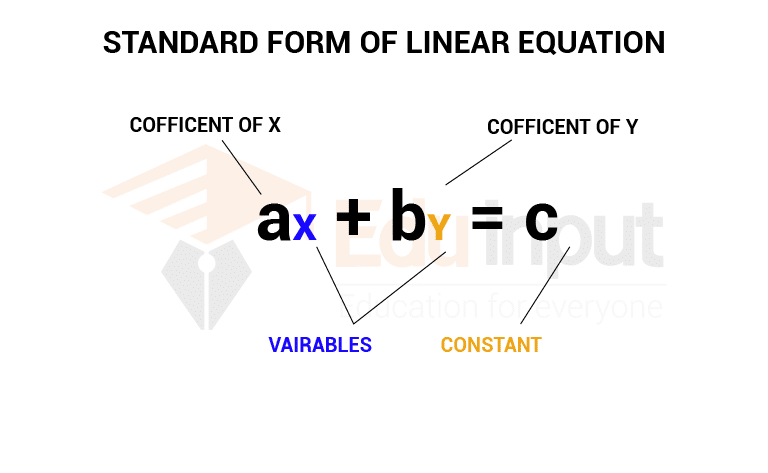
A linear equation has the following format:

ax + by = c

Where a and b are coefficients, x and y are variables, and c is a constant.

For example,

  • 3x + 2y = 12
  • 5x – y = 20

These are linear equations with two variables, x and y.

What is a System of Linear Equations?

A system of linear equations is two or more linear equations working together.

For example,

3x + 2y = 12

5x – y = 20

This is a system of two linear equations with two variables. The goal is to find the values of x and y that satisfy both equations simultaneously.

Systems can have more than two equations and variables, but the concept remains the same.

Methods for Solving Systems of Linear Equations

There are several different methods that can be used to solve systems of linear equations.

  • Graphical method
  • Substitution Method
  • Elimination Method
  • Cross-Multiplication Method
  • Matrix method

1: Graphing

  • Graph each linear equation on the x-y coordinate plane.
  • The point where the graphs intersect is the solution to the system.
  • This method is helpful for visualizing systems of two equations.

2: Substitution

  • Isolate one variable in one of the equations.
  • Substitute the expression for that variable into the other equations.
  • Solve the new equation to find one variable’s value.
  • Substitute this value to find the other variable.

3: Elimination

  • Make coefficients of one variable the same in all equations.
  • Add equations together to eliminate that variable.
  • Solve the new equation to find one variable’s value.
  • Substitute this value to find the other variable.

These are the three main methods used to solve systems of linear equations.

Examples

Examples of solving a system using these three methods.

System:

3x + 2y = 12

5x – y = 20

Graphing

Graph both equations on the x-y plane. The intersection point is at (2, 4). Therefore, x = 2 and y = 4.

Substitution

Isolate y in the first equation:
y = (12 – 3x)/2

Substitute this into the second equation:
5x – (12 – 3x)/2 = 20
9x – 6 = 20
9x = 26
x = 26/9 = 2

Now substitute x = 2 back into the first equation to get y = 4.

Elimination

Multiply the first equation by -5:
-15x – 10y = -60

Add it to the second equation:
-15x – 10y = -60
5x – y = 20
-10y = -40
y = 4

Substitute y = 4 back into an equation to get x = 2.

The same solution is reached through all three methods.

A system of linear equations contains two or more linear equations working together. They can be solved by graphing, substitution, or elimination methods.

Also Read Solving Linear Equations in One Variable

FAQs

Can a system of linear equations have no solution?

Yes, if the equations are inconsistent or contradictory, the system can have no solution. The graphs would be parallel lines that never intersect.

What if a system has infinite solutions?

This occurs when the equations are dependent, meaning one equation can be multiplied to become the other. The graphs would coincide and give infinite points of intersection.

What is a linear equation?

A linear equation is an equation that can be expressed in the form ax + by = c, where a, b, and c are constants, and x and y are variables.

How do you know which method to use to solve a system?

Graphing works well for visualizing two equations. Substitution is helpful if one variable can be easily isolated. Elimination is best if coefficients can be made equal. Trying different methods helps determine the quickest route.
Graphing Linear Equations of Two Variables

Graphing linear equations with two variables is an important skill in algebra. It allows us to visualize relationships between two quantities and is a fundamental tool in understanding real-world scenarios.

To simplify solving such equations, use our Two Step Equations Calculator for step-by-step solutions.

In this article, we will discuss the graphing linear equations with two variables.

Graphing Linear Equations with Two Variables

Step 1: Identifying the Equation

A linear equation with two variables typically follows the form:

y = mx + b

Here, (m) represents the slope, and (b) is the y-intercept.

Step 2: Plotting the Y-Intercept

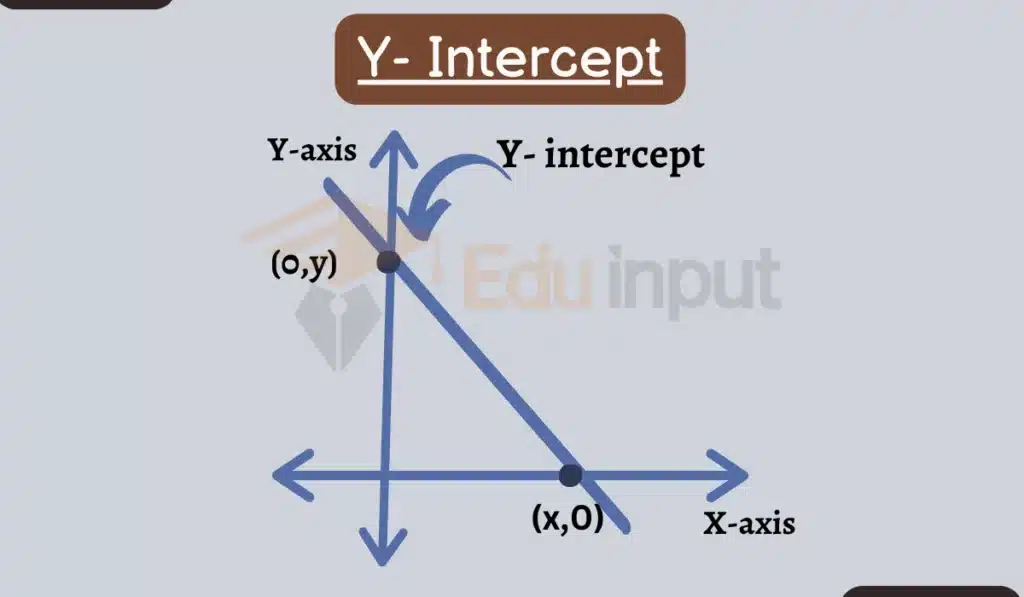
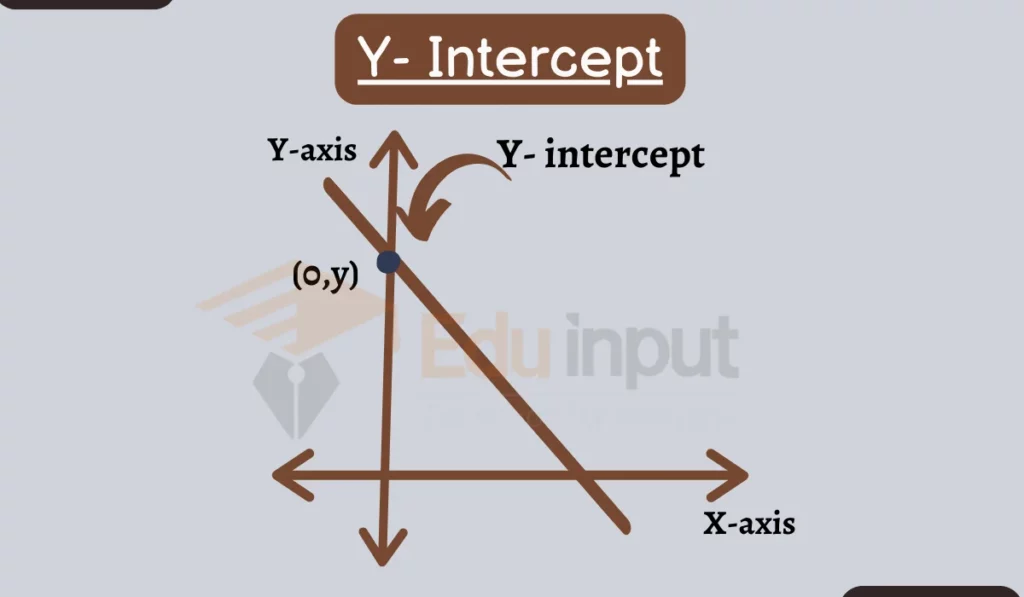
Y-intercept (b) is the point where the line crosses the y-axis. To plot it, find the value of (b) and mark that point on the graph.

Step 3: Calculating the Slope

Slope (m) defines the line’s steepness. To find the slope, choose two points on the line and use the formula:

m= y2 – y1 / x2 – x1

Step 4: Plotting the Line

Starting from the y-intercept, use the calculated slope to find additional points on the line.

Solved Examples

Example

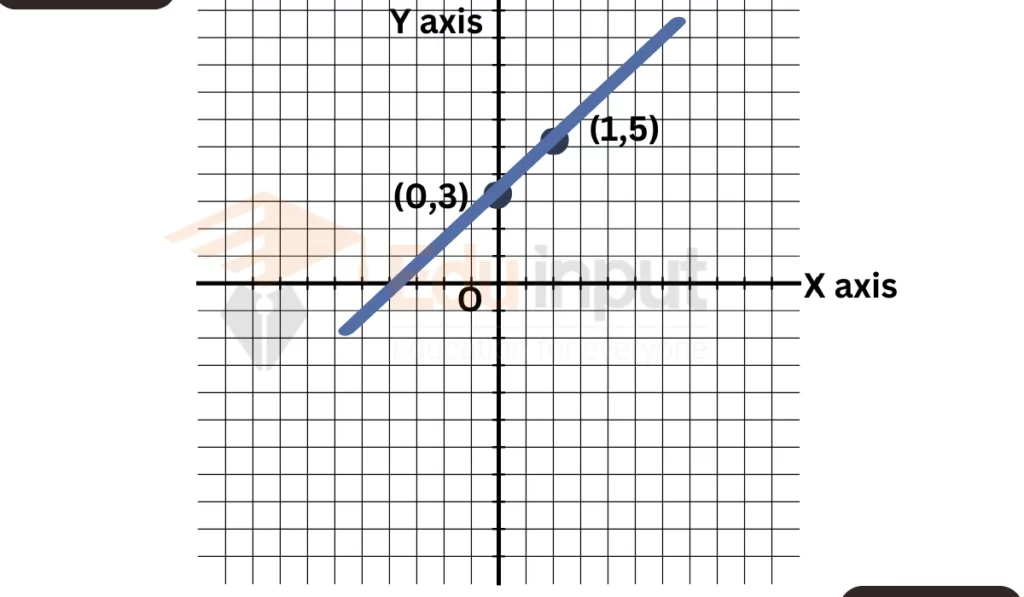
Graph the equation (y = 2x + 3).

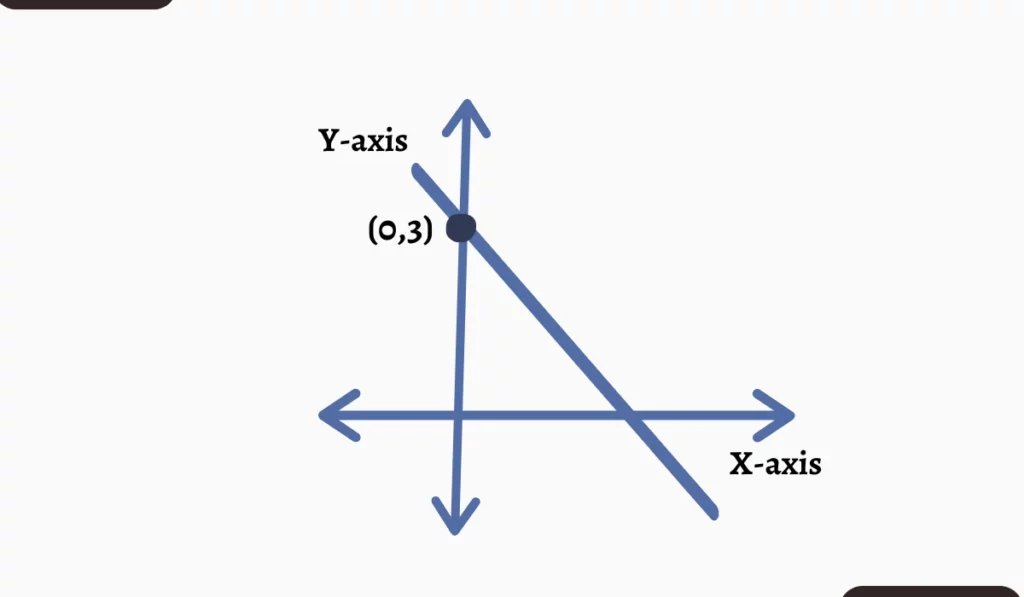
Y-Intercept

Put x = 0 in equation,

y = 2(0) + 3

y = 3

So, the first point is (0, 3).

Slope

compare with general equation,

m = 2

Using the slope, we can find another point.

For example, let (x = 1). Then, y = 2(1) + 3 = 5. So, the second point is (1, 5).

Plot the two points on the graph and draw a straight line connecting them.

image of solving linear equations

Example

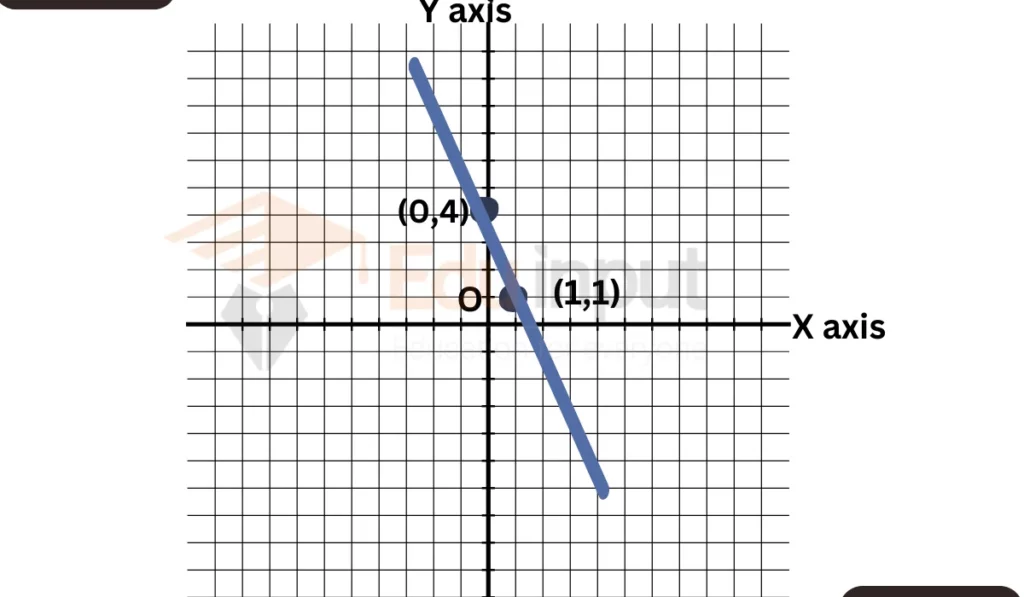
Graph the equation (y = -3x + 4).

Y-Intercept

For Y- intercept, put x=0

y = – 3(0) + 4

y = 4

So, the first point is (0, 4).

Slope

Compare with general equation,

m = -3

Using the slope, we can find another point.

Let (x = 1). Then, (y = -3(1) + 4 = 1). So, the second point is (1, 1).

Plot the points and draw the line.

image showing solving of linear equation

FAQs

What is the significance of graphing linear equations with two variables?

Graphing allows us to visualize the relationship between two quantities, making it easier to analyze and solve real-world problems.

Can we have a negative slope in a linear equation?

Yes, a negative slope indicates a descending line, while a positive slope represents an ascending line.

Is it possible to graph equations with fractions?

Absolutely. You can graph equations with fractional slopes and intercepts just like whole numbers.

What if a linear equation has no y-intercept?

In such cases, the line will be parallel to the x-axis and will not intersect the y-axis.

Solving Linear Equations in One Variable

Linear equations are fundamental in mathematics and have wide applications in various fields. They provide a simple yet powerful way to solve real-world problems.

If you’re looking for an easy way to solve these equations, try our Two Step Equations Calculator to get quick and accurate solutions.

What is a Linear Equation?

A linear equation is a mathematical expression that represents a straight line on a graph.

It is written as ax + b = c, where a, b, and c are constants, and x is the variable.

The goal is to find the value of x that satisfies the equation.

For example,

  • 2x = 1
  • 33x-1 = 0
  • 6x+9 = -11

Standard Form of Linear Equations in One Variable

The standard form of linear equations in one variable is represented as:

a x + b = 0

Where,

  • ‘a’ and ‘b’ are real numbers.
  • Both ‘a’ and ‘b’ are not equal to zero.

Types of Linear Equations

There are three types of linear equations.

Simple Linear Equation

These equations involve only one variable.

For eaxmple,

2x + 3 = 7

Two-Step Linear Equation

These require two steps to isolate the variable.

For example,

2x – 5 = 9

Multi-Step Linear Equation

These involve more complex operations.

For example,

3(x + 2) – 4 = 7

Also Read About Systems of Linear Equations

Solving Linear Equations Step by Step

Addition and Subtraction Method

To solve linear equations, we can use the addition and subtraction method. The steps are as follows:

  1. Isolate the variable term on one side of the equation by adding or subtracting terms.
  2. Perform the same operation on both sides to maintain the equation’s balance.
  3. Simplify the equation to obtain the variable’s value.

Multiplication and Division Method

Another method for solving linear equations is multiplication and division. Here’s how it works:

  1. Isolate the variable by multiplying or dividing both sides of the equation.
  2. Perform the same operation on both sides to keep the equation equal.
  3. Simplify and find the value of the variable.

Example

Example 1

2x + 3 = 9

Step 1: Subtract 3 from both sides to isolate the variable:

2x + 3 – 3 = 9 – 3

2x = 6

Step 2: Divide both sides by 2 to solve for ‘x’:

2x / 2 = 6 / 2

x = 3

So, the solution to the equation is x = 3.

Example 2

4x – 7 = 13

Step 1: Add 7 to both sides to isolate the variable:

4x – 7 + 7 = 13 + 7

4x = 20

Step 2: Divide both sides by 4 to solve for ‘x’:

4x / 4 = 20 / 4

x = 5

So, the solution to the equation is x = 5.

Solving linear equations in one variable is a valuable skill with wide-ranging applications.

Difference between Linear and Nonlinear Equation

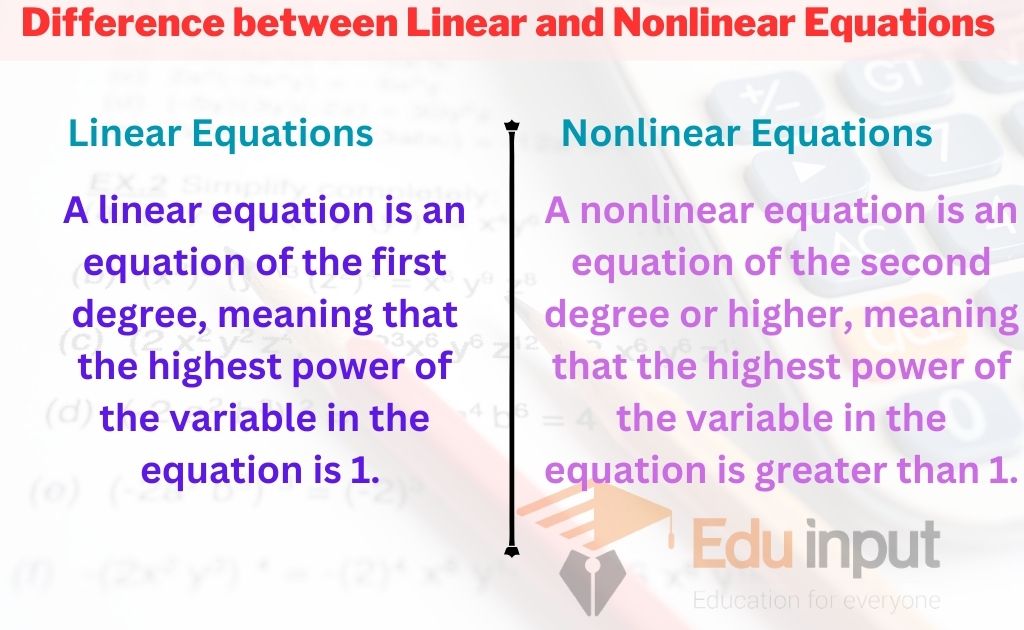
The key difference between linear and nonlinear equations is that linear equations have a straight-line graph with a constant slope and a unique solution, while nonlinear equations have a curved graph with a varying slope and one or more solutions.

Difference between Linear and Nonlinear Equations

Linear Equation VS Nonlinear Equation

CharacteristicsLinear EquationsNonlinear Equations
Highest power of variable1Greater than 1
Graph shapeStraight lineCurved
SlopeConstantVaries
Number of solutionsUniqueOne or more
FormSimpleMore complex
Examples2x + 3 = 0, 5y – 7 = 0, 3z + 1 = 0x^2 + 3x – 2 = 0, y^3 – 2y + 1 = 0, z^(1/2) + z^(1/3) – 1 = 0

Difference between Linear and Nonlinear Equation

Linear Equations

  1. Form a straight line or represent the equation for the straight line
  2. Have only one degree, with the maximum degree being 1
  3. All equations form a straight line in the XY plane, which can be extended in a straight form to any direction `
  4. General Representation: y = mx + c, where x and y are variables, m is the slope of the line, and c is a constant value
  5. Examples: 10x = 1, 9y + x + 2 = 0, 4y = 3x, 99x + 12 = 23y

Nonlinear Equations

  1. Do not form a straight line but form a curve
  2. Have a degree of 2 or more, but not less than 2
  3. Form a curve, with the curvature of the graph increasing as the degree increases
  4. General Representation: ax^2 + by^2 = c, where x and y are variables, and a, b, and c are constant values
  5. Examples: x^2 + y^2 = 1, x^2 + 12xy + y^2 = 0, x^2 + x + 2 = 25 in a number form

10+ Examples of Linear Algebra Applications in Computer Science

Linear algebra is one of the most foundational branches of mathematics used in computer science. It deals with vectors, matrices, linear transformations, and systems of linear equations, tools that power everything from 3D video games to machine learning algorithms. In this post, we’ll explore real-world and computer science-specific applications of linear algebra, showing how concepts like matrices, eigenvectors, and vector spaces solve complex problems in technology.

Examples of Linear Algebra in Computer Science

Here are some applications of linear algebra in computer:

Image showing Examples of Linear Algebra Applications in Computer Science

1. 3D Transformations in Computer Graphics

In video games and simulations, objects don’t just sit still, they move, rotate, zoom in, and change shape. All of this happens through matrix multiplication. Every 3D object is represented by a set of vectors. When we apply 4×4 transformation matrices, we can rotate, scale, or translate those vectors to animate characters, shift camera angles, or move objects through space.

Linear algebra in computer science makes this possible by encoding movements in matrix form, which the computer multiplies with object coordinates to update their positions in real time.

2. Character Rigging and Animation

Animation software like Blender uses skeleton-based animation to bring characters to life. A digital skeleton made of joint hierarchies is controlled by matrix operations. These matrices control how one bone affects the others and how transformations propagate throughout the body.

By manipulating these matrices, animators achieve smooth motion—walking, waving, or blinking—ensuring every frame is mathematically correct and physically consistent.

3. Virtual Reality (VR) Rendering

To render immersive 3D worlds in virtual reality, projection matrices are used to map 3D environments onto 2D displays inside VR headsets. These transformations also adjust dynamically based on head movement tracking.

Linear algebra allows the system to compute the scene from the user’s viewpoint in real time, making the experience interactive and lifelike. These are powerful matrix applications in graphics that keep users engaged in digital worlds.

4. Neural Network Training in Machine Learning

Neural networks—the engines behind AI systems like ChatGPT—rely on matrix and tensor operations. During training, weight matrices are adjusted through a process called backpropagation, where the system learns from errors using gradient descent.

Linear algebra ensures that this learning is fast and scalable, especially with libraries like PyTorch and TensorFlow that use linear transformations across millions of data points.

5. Principal Component Analysis (PCA)

PCA is a dimensionality reduction technique used in data science to simplify large datasets while retaining their essential patterns. It works by computing the eigenvectors and eigenvalues of a covariance matrix to find the directions of maximum variance.

This technique helps visualize high-dimensional data and extract the most relevant features, proving how eigenvectors in machine learning simplify complexity.

6. Recommendation Systems

Platforms like Netflix or Spotify use matrix factorization to recommend content. They build a large matrix representing user-item interactions (e.g., user ratings) and apply techniques like singular value decomposition (SVD) to break it into smaller components.

These simplified matrices capture patterns like user preferences or item similarity, allowing the system to predict what users might like next.

7. Linear Regression Models

Linear regression, a fundamental predictive model in statistics and machine learning, uses systems of linear equations to fit a line to data points. Solving the normal equations or applying least squares optimization involves matrix algebra.

It’s used in applications like sales forecasting, financial modeling, and risk prediction, showing how linear algebra in computer science applies to real business problems.

8. Hill Cipher in Cryptography

The Hill cipher is a classical encryption method that uses matrix multiplication to encode messages. Plaintext is converted into a vector and multiplied by a key matrix, then transformed back into letters using modular arithmetic.

Though basic, the Hill cipher demonstrates how linear algebra contributes to data security and encryption by scrambling and unscrambling messages mathematically.

9. Facial Recognition in Image Processing

In facial recognition systems, images are treated as matrices of pixel values. Techniques like eigenfaces use eigenvectors to reduce image dimensions and capture essential features for comparing faces.

These linear algebra methods are crucial in verifying identities in phones, security cameras, or airport biometrics. The combination of matrix operations and eigen decomposition makes this technology possible.

10. PageRank Algorithm in Web Search

Google’s PageRank algorithm models the internet as a directed graph, where each website is a node and hyperlinks are edges. A transition matrix is built and its eigenvector (representing the steady-state distribution) is computed to rank pages based on importance.

This powerful use of eigenvectors in machine learning and web search transformed how we navigate the internet.

11. JPEG Image Compression

JPEG compression uses the discrete cosine transform (DCT) to convert pixel data into frequency components, which are easier to compress. DCT is a linear transformation performed using matrix operations.

By keeping only the most important frequency values, JPEG reduces file size without losing much visual quality, showing how linear algebra simplifies multimedia storage.

12. Robotic Arm Movement

In robotics, especially manufacturing, the position and orientation of robotic arms are calculated using rotation and transformation matrices. Each joint’s movement affects the others, and the overall pose is found using matrix chains.

This allows robots to assemble electronics, paint cars, or perform surgeries with incredible accuracy—all powered by matrix math.

13. Quantum Computing Simulations

In quantum computing, quantum states are vectors in a complex vector space, and quantum gates are represented by unitary matrices. Simulating qubits and their interactions involves advanced linear algebra, especially tensor products and matrix multiplication over complex numbers.

Libraries like Qiskit simulate quantum behavior using these principles, pushing the boundaries of future computing.

14. Optimizing Network Traffic

Communication networks (e.g., the internet) can be modeled using adjacency matrices, representing the connections between servers or routers. Linear systems are then solved to optimize data routing, reducing lag and congestion.

Whether it’s optimizing routes or identifying bottlenecks, linear algebra helps make our networks faster and smarter.

Summary – Linear Algebra in Computer

Application AreaExample Use CaseKey Linear Algebra Concept
Computer Graphics3D object transformationsMatrix multiplication
AnimationSkeletal rigging in animated charactersTransformation matrices
Virtual RealityVR headset rendering and trackingProjection matrices
Machine LearningNeural network trainingTensor operations
Data SciencePCA for dimensionality reductionEigenvectors, covariance matrices
RecommendationsNetflix and Amazon suggestionsMatrix factorization (SVD)
Regression ModelsForecasting and predictionsSolving linear equations
CryptographyHill cipher encryptionMatrix multiplication + modular math
Facial RecognitionEigenface feature extractionEigenvectors from image matrices
Search EnginesGoogle PageRankEigenvector of link matrix
Image CompressionJPEG formatDiscrete cosine transform (DCT)
RoboticsRobotic arm movementRotation/translation matrices
Quantum ComputingQubit simulationsUnitary matrices, vector spaces
Network OptimizationData flow managementAdjacency matrices, linear systems

Linear and Nonlinear Functions Worksheet

This Linear and Nonlinear Functions Worksheet is a practice worksheet for students who want to learn the difference between linear and nonlinear functions. Linear functions create straight lines when graphed, while nonlinear functions can curve, zigzag, or have other shapes. Whether you are in grade 5, grade 6, grade 8, or grade 9, this worksheet will help you understand these essential math concepts in a simple and fun way.

The worksheet includes different types of problems, such as identifying functions from graphs, tables, and equations. It starts with easy questions and gradually moves to more challenging ones, so you can learn step by step. If you need a printable version, you can download the Linear and Nonlinear Functions Worksheets PDF and print it to practice anytime, anywhere.

Printable Linear and Nonlinear Functions Worksheet

Image showing linear and nonlinear functions worksheets

Benefits of Linear and Nonlinear Functions Worksheets

  • Easy to Understand: The worksheet only explains linear and nonlinear functions. This makes it perfect for beginners.
  • Step-by-Step Learning: It starts with basic problems and slowly increases difficulty. It helps you build confidence.
  • Improves Problem-Solving Skills: By solving different types of questions, you will get better at analyzing functions and graphs.
  • Great for Practice: Whether you need extra practice at home or want to prepare for a test, this worksheet is a helpful resource.
  • Printable & Convenient: You can download and print it anytime, so you can practice even without the internet.

Introduction to Linear Algebra

What Is Linear Algebra?

Linear algebra is a branch of mathematics that deals with vectors, matrices, vector spaces, linear mappings, and systems of linear equations. It analyzes how linear functions map vectors while preserving addition and scalar multiplication. It helps solve equations, represent geometric transformations, and model real-world systems.

It solves linear equations used in physics, engineering, and computer science. It provides the foundation for computational mathematics, data analysis, and artificial intelligence.

Linear algebra supports geometry, calculus, and computational algorithms. It simplifies complex equations by breaking them into linear components. It models multidimensional spaces and enables efficient data processing.

Historical Origins

Linear algebra has roots in ancient mathematics. Chinese and Babylonian scholars solved simultaneous equations using early matrix-like methods. In the 17th century, René Descartes introduced coordinate geometry, linking algebra with spatial representation.

In the 18th century, Gabriel Cramer developed determinant-based solutions for linear systems. Carl Friedrich Gauss later refined Gaussian elimination, a fundamental method for solving equations. In the 19th century, Hermann Grassmann introduced abstract vector spaces, while Arthur Cayley formalized matrix algebra.

Modern developments expanded linear algebra into higher dimensions and computational applications. It now plays a critical role in numerical analysis, theoretical physics, and artificial intelligence.

Basic Building Blocks of Linear Algebra

Linear algebra relies on vectors, scalars, and coordinate systems. It represents quantities, performs operations, and structures spatial data. It forms the foundation for physics, engineering, and data science.

1: Vectors

Vectors represent quantities with magnitude and direction. They describe motion, force, and physical phenomena. They appear as arrows, where length shows magnitude and the arrowhead indicates direction.

  • Scalar and Vector Quantities – Scalars have only magnitude, such as temperature and mass. Vectors have both magnitude and direction, such as velocity and acceleration. Scalars represent single values, while vectors define movement in space.
  • Vector Operations – Vector addition connects two vectors head-to-tail. The resultant vector spans from the first tail to the second head. Vector subtraction reverses direction by adding the opposite vector. Scaling changes magnitude by multiplying a vector by a scalar.

2: Scalars vs. Vectors

Scalars define one-dimensional quantities without direction. Vectors describe multi-dimensional motion with magnitude and direction. Scalars remain unchanged by rotation, while vectors shift with orientation.

3: Coordinate Systems

Coordinate systems define vector positions in space. They describe locations using numerical values. They support mathematical operations in geometry, physics, and engineering.

4: 2D and 3D Coordinate Representations

A 2D coordinate system uses x and y axes. It represents points on a flat plane. A 3D coordinate system includes an additional z-axis. It defines positions in three-dimensional space.

  • Cartesian Coordinate System – The Cartesian system represents vectors with numerical components. In 2D, a vector appears as (x, y). In 3D, it extends to (x, y, z). It allows vector addition, subtraction, and scaling using algebraic formulas.
  • Vector Representation in Cartesian Coordinates – Vector addition follows (x₁, y₁) + (x₂, y₂) = (x₁ + x₂, y₁ + y₂). Vector subtraction follows (x₁, y₁) − (x₂, y₂) = (x₁ − x₂, y₁ − y₂). Scaling follows c(x, y) = (cx, cy). Cartesian vectors simplify complex spatial calculations.

Core Concepts of Linear Algebra

Linear algebra forms the foundation of vector spaces, transformations, and mathematical modeling. It helps solve systems of equations, analyze geometric structures, and optimize real-world problems. Key concepts include linear equations, linear combinations, and vector dependence.

Linear Equations

A linear equation represents a straight-line relationship between variables. The highest power of variables remains 1. These equations describe motion, forces, and financial models.

A linear equation follows the form ax + by = c, where a, b, and c are constants. The equation represents a straight line when plotted on a graph. Variables appear without exponents or multiplications between them.

A linear equation follows the form:

ax + by = c

Where a, b, and c are constants, and x and y are variables. The equation remains linear as long as variables are raised to the first power. If squared, cubed, or multiplied together, it becomes nonlinear.

System of Linear Equations

A system of linear equations contains multiple equations solved together. It determines unknown values that satisfy all equations simultaneously.

Example:
2x + 3y = 7
x − 2y = −3

Systems can have one solution, infinitely many solutions, or no solution.

Graphical Representation of Linear Equations

Each linear equation represents a straight line on a coordinate plane. The solution to a system is the intersection point of the lines.

Graphical Representation of Linear Equations
  • One solution: Lines intersect at a single point.
  • No solution: Lines are parallel and never meet.
  • Infinite solutions: Lines overlap completely.

A plane represents each equation in three dimensions, and their intersection defines the solution set.

Linear Combinations

A linear combination expresses a vector as a sum of scaled vectors. It forms the basis for spanning vector spaces and solving equations.

General form:

a1v1 + a2v2 +⋯ +anvn

where a1, a2, …., an​ are scalars, and v1, v2,…,vn ​ are vectors. Linear combinations determine if a set of vectors spans a space. If every vector in a space can be expressed as a combination of given vectors, they form a spanning set.

Linear Dependence and Independence

Vectors are either linearly dependent or linearly independent based on their relationships.

  • Linearly dependent vectors: At least one vector can be expressed as a combination of others.
  • Linearly independent vectors: No vector depends on any others in the set.

Mathematically, a set of vectors {v1, v2,…,vn} is dependent if there exist scalars a1, a2, …., an, not all zero, such that:

a1v1 + a2v2 +⋯ +anvn  =0

If the only solution is all scalars being zero, the vectors are independent.

Solving Systems of Equations By Graphing Worksheets

This worksheet focuses on solving systems of equations by graphing. It helps students understand how to graph two or more equations on the same graph and find where the lines intersect. The point of intersection is the solution to the system of equations. This method makes solving systems easier and more visual. Solving systems of equations by graphing worksheets with answers provides step-by-step solutions to help students follow along and understand the process.

You can download the solving systems of equations by graphing worksheets pdf for practice at home. These worksheets are perfect for students of all levels, including solving systems of equations by graphing worksheets grade 9. For additional practice, you can also explore the solving systems of equations by substitution worksheet. The system of linear equations worksheet with answers PDF helps students practice and check their solutions. To support your learning, the solving systems of equations by graphing worksheets answer key provides the correct solutions, allowing students to verify their work. Best of all, many of these worksheets are available for solving systems of equations by graphing worksheets free online. The solving systems of equations by graphing worksheet standard ensures you practice solving equations following the most common methods in algebra.

Printable Solving Systems of Equations By Graphing Worksheets

Image showing Solving Systems of equations by graphing worksheets

Benefits of Using the Solving Systems of Equations by Graphing Worksheets

  • Clear Understanding: Helps students learn how to solve systems of equations visually by graphing.
  • Step-by-Step Guidance: Solving systems of equations by graphing worksheets with answers provides detailed solutions for easy understanding.
  • Improved Problem-Solving Skills: Regular practice with solving systems of equations by graphing worksheets pdf helps students improve their ability to solve algebraic problems.
  • Practice with Different Methods: Students can also explore the solving systems of equations by substitution worksheet to learn other solving techniques.
  • Visual Learning: Graphing equations makes it easier to see how solutions work, enhancing understanding of the topic.
  • Check Your Work: The solving systems of equations by graphing worksheets answer key allows students to verify their solutions and learn from their mistakes.

Linear function worksheets

Download the Linear Function worksheets to help students practice identifying, graphing, and analyzing linear functions, including slope-intercept form, standard form, and real-world applications.

Image showing Linear function worksheets

Solving equations with distributive Property worksheets

Download the Solving Equations with Distributive Property worksheets to help students practice applying the distributive property to simplify and solve linear equations step by step.

Image showing Solving equations with distributive Property worksheets

Solving Quadratic Equations by Factoring

Quadratic equations are equations that contain a squared variable term, such as x2. One common method for solving quadratic equations is factoring.

Factoring involves breaking down the quadratic expression into simpler factors that can be set equal to zero.

In this article, we will discuss solving quadratic equations by factoring.

Steps for Factoring to Solve Quadratics

Solving quadratic equations by factoring involves four main steps:

  • Put the equation in standard quadratic form: ax2 + bx + c = 0
  • Factor the quadratic expression ax2 + bx + c
  • Set each factor equal to zero and solve the simpler equations
  • Verify the solutions by plugging them back into the original equation

Example

Solve the equation x2 – 5x + 6 = 0 by factoring.

Step 1) Put Into Standard Form

The equation is already in standard quadratic form, with a = 1, b = -5, and c = 6.

Step 2) Factor the Quadratic Expression

x2 – 5x + 6 = x2 – 3x -2x + 6

=(x – 2)(x – 3)

Step 3) Set Factors Equal to Zero

Setting each factor equal to zero gives us:

(x – 2) = 0 , (x – 3) = 0

x – 2 = 0 , x – 3 = 0

x = 2 , x = 3

The possible solutions are x = 2 and x = 3.

Step 4) Verify Solutions

Plugging x = 2 and x = 3 back into the original equation.

Therefore, the solutions are x = 2 and x = 3.

Solved Examples Quadratic Equations by Factoring

Example

Solve 3x2 – 5x – 2 = 0

Solution

3x2 – 5x – 2 = 0

3x2 – 6x + x – 2 = 0

3x (x – 2) + 1 (x – 2) = 0

(3x + 1)(x – 2) = 0

3x + 1 = 0 , x – 2 = 0

x = -1/3 , x = 2

Solutions: x = -1/3 and x = 2

Example

Solve x2 + x – 20 = 0

Solution

x2 + x – 20 = 0

x2 + 5x -4x – 20 = 0

x (x + 5) -4 (x + 5) = 0

(x + 5)(x – 4) = 0

(x + 5) = 0 , (x – 4) = 0

x = -5 , x = 4

Solutions: x = 4 and x = -5

FAQs

What are some tips for factoring quadratic expressions?

Look for factor pairs that multiply to ac and add to b
Try breaking the middle term bx into two terms with a common factor
Use the difference of squares pattern if appropriate (a2 – b2 )= (a + b)(a – b))
Use other patterns like perfect square trinomials if applicable
Double check your factors by multiplying them out

When can’t I use factoring to solve a quadratic?

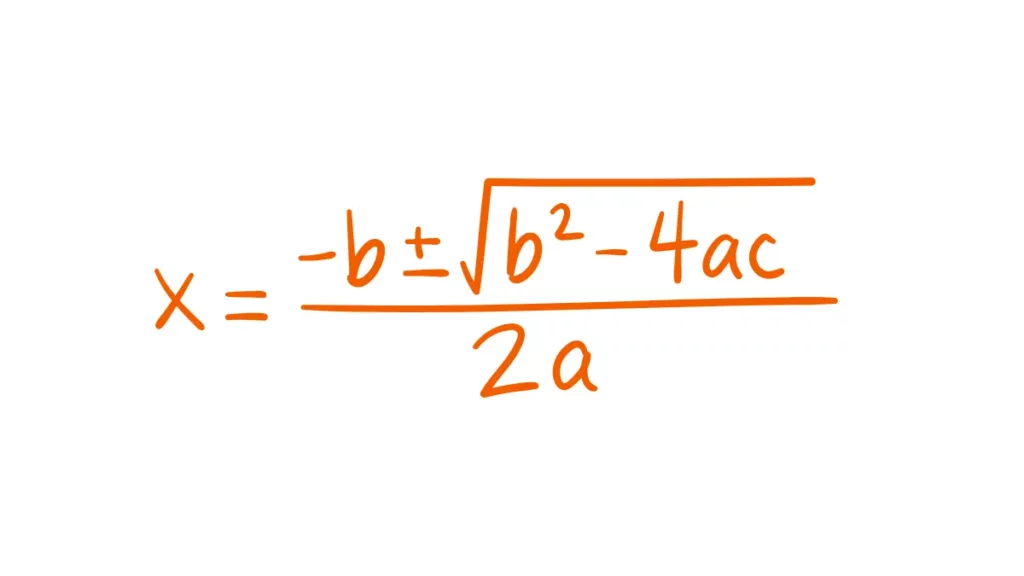
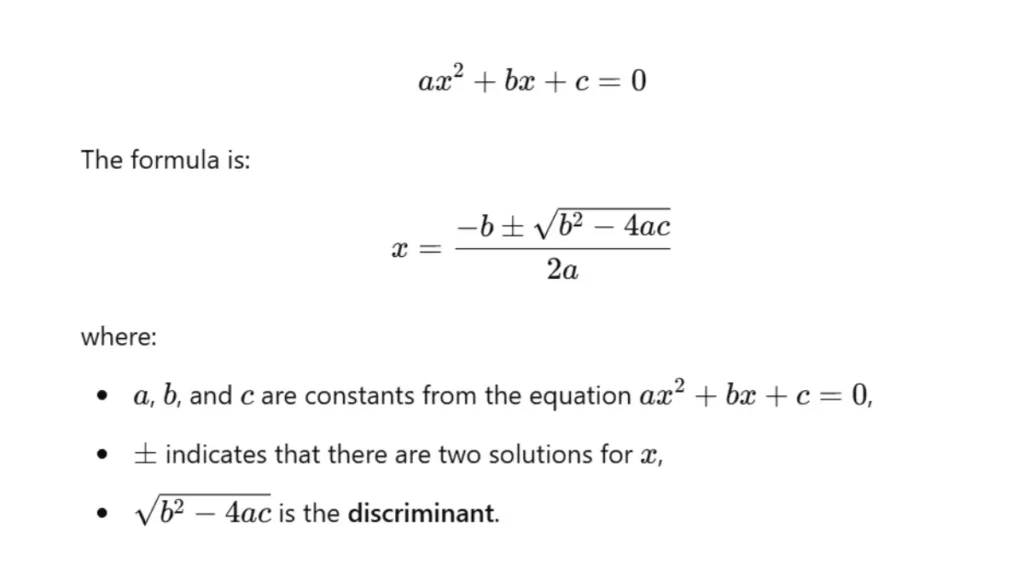
You can’t use factoring if the quadratic expression does not factor into the product of two simpler linear expressions. In these cases, you’ll need to use another method like the quadratic formula.

What other methods can I use to solve quadratics?

Quadratic formula
Completing the square
Graphing the parabola and finding x-intercept

10 Examples of Systems of Equations

In mathematics, system of equations is a collection of two or more equations that share the same set of variables.

In this article, we will discuss ten examples of systems of equations in mathematics.

Examples of Systems of Equations

These are 10 examples of system of equations.

1: Linear Equations in Two Variables

Classic example of a system of equations involves two linear equations in two variables.

For example,

2x + 3y = 7

4x – y = 6

2: Three Equations with Three Unknowns

Systems can have more equations and variables. A system with three equations in three variables is,

x + y – z = 5

2x – 3y + z = 1

3x + y + 2z = 8

3: Distance, Rate, and Time Problems

Systems of equations are useful for solving distance, rate, and time problems.

For example, If you travel 300 miles at a certain speed, it takes 5 hours. If you increase your speed by 10 mph, you can cover the same distance in 4 hours. Find the original speed.

4: Mixing Problems

Mixing problems involve combining solutions with different concentrations. A system of equations help determine the quantities of each solution.

5: Investment and Interest Problems

When calculating investments with different interest rates, a system of equations help determine the amount to invest at each rate to achieve a specific total return.

6: Physics Problems

Physics often involves systems of equations.

For example, equations related to velocity, acceleration, and time are used to solve problems involving motion.

7: Chemical Reactions

Balancing chemical equations is a classic application of systems of equations in chemistry. For assistance with balancing, try the Chemical Equation Calculator.

8: Economics and Market Equilibrium

Systems of equations are used to model supply and demand in economics, helping to find equilibrium prices and quantities.

9: Circuit Analysis

Electrical circuits are analyzed using systems of equations. The Kirchhoff’s circuit laws are expressed through a system of equations.

10: Optimization Problems

In optimization, we seek to maximize or minimize a particular quantity. Systems of equations are used to formulate constraints and objectives in these problems.

10 Examples of Differential Equations

Differential equations are a fundamental concept in mathematics and science, used to describe how quantities change in relation to one another. They play a important role in various fields, from physics to engineering and biology.

In this article, we will explore examples of differential equations.

Examples of Differential Equations

These are 10 examples of differential equations.

1: First-Order Linear Differential Equation

A first-order linear differential equation is one of the simplest types and is used to describe a rate of change that is directly proportional to the current state.

For example, dy/dx = y

2: Second-Order Linear Differential Equation

This equation involves the second derivative and is commonly used to describe physical systems with acceleration and force, such as a mass on a spring.

For example,

y'' + g = 0  

3: Simple Exponential Growth

Differential equations can describe exponential growth, where a quantity’s rate of change is proportional to its current value. For example,

dy/dt = ky

4: Newton’s Law of Cooling

This equation describes how the temperature of an object changes as it cools or heats up in a surrounding environment. For example

dT/dt = -k(T - T_s)

5: Harmonic Oscillator Equation

Found in physics, this equation describes the motion of a particle subjected to a restoring force. For example,

m̈ + kx = 0

6: Euler’s Differential Equation

Euler’s equation is a famous example in mathematics, often used in solving problems involving complex numbers. Fir example

ay” + by’ + cy = 0

7: Logistic Growth Equation

This equation models population growth when resources are limited, and growth rates slow as the population approaches a carrying capacity. For example,

dy/dt = ky(1 – y/K)

8: Pendulum Differential Equation

It describes the motion of a pendulum, which swings back and forth under the influence of gravity. For example,

θ” + (g/L)sin(θ) = 0

9: Wave Equation

Used extensively in physics and engineering, the wave equation describes the behavior of waves, such as sound or light. For example,

∂²u/∂t² = v²∇²u

10: Schrödinger Equation

In quantum mechanics, the Schrödinger equation is fundamental, describing how the wave function of a physical system changes over time. For example,

iℏ∂ψ/∂t = −(ℏ²/2m)∇²ψ + Vψ

Relation Between Angular And Linear Velocities

In this article, we will discuss the relation between angular and linear velocities. The rate of change of angular displacement is called angular velocity. And the rate of change of linear displacement is called linear velocity.

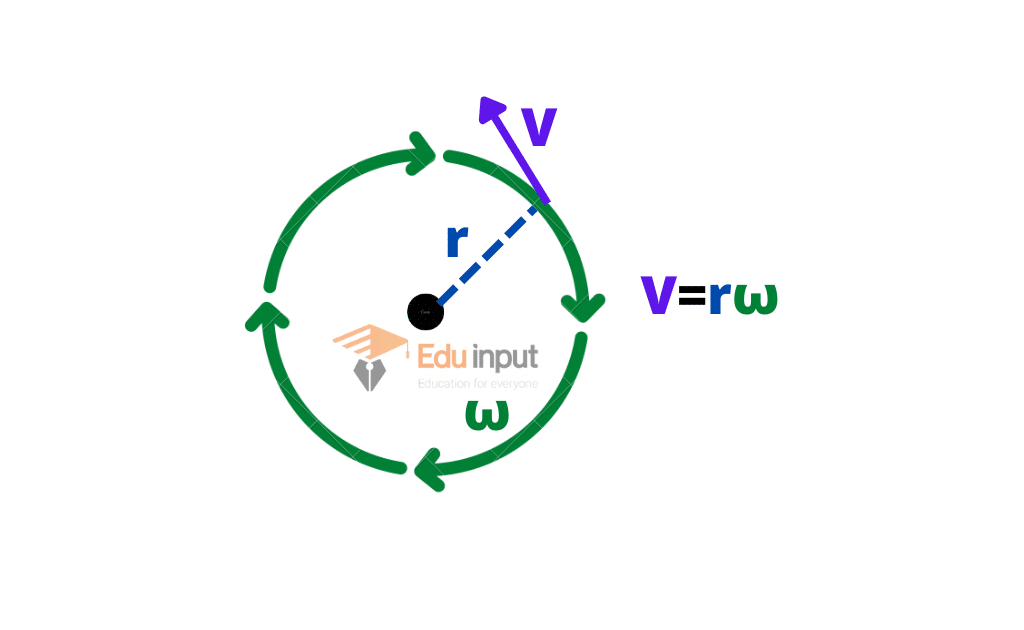
Consider a rigid body rotating about the z-axis with an angular velocity ω along a circle of radius ‘r’. Point P moves along a circle with a linear velocity V but the line OP rotates with angular velocity ω.

image showing the rigid rotating body

As the axis of rotation is fixed, the direction of ω remains the same and so can be considered as a scalar. Similarly, we only considered the magnitude of linear velocity which is also treated as a scalar.

Download pdf notes of Relation between Angular and Linear Velocities class 11 physics

Relation Between Angular And Linear Velocities

Consider the motion of point P along the circle. Let point P moves through distance P1P2 = Δs in time interval Δt. Then the reference line OP has an angular displacement Δθ radian in that time interval Δt.

image showing the angular velocity of rotating body

Then by the relation

Δs=r Δθ

Dividing the both sides by Δt and applying limit Δt -0

limΔt–0 Δs/ Δt = r limΔt–0 Δθ/ Δt

V=rω

This equation shows the relation between angular and linear velocities. Where v is the velocity of point P and ω is the angular velocity of reference line OP.

In the limit, Δt–0 the length of arc P1P₂ becomes very small and its direction is tangent to the circle at point P1.

Thus the magnitude of velocity when moving along the circle is V but its direction is tangent to the circle. That is why the linear velocity of point P is also known as tangential velocity.

image showing the Relation between Angular and Linear Velocities

Difference Between Angular And Linear Velocity

Angular velocityLinear Velocity
The rate of change of angular displacement is called angular velocityThe rate of change of linear displacement is called linear velocity
In a circular motion, the angular velocity of a particle is along the axis of a circle.In a circular motion, the linear velocity of a particle is along the circumference of a circle.
Angular velocity remains the same in a circle.Linear velocity changes at every point in the circle.
The Units of Angular velocity are degree and radian.The Unit of linear velocity is m/s.
Angular velocity is represented by ωLinear velocity is represented by v

Relation between Linear and Angular Acceleration

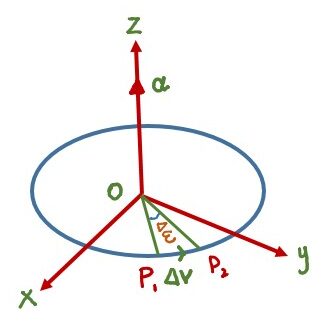
When the reference line OP is rotating with an angular acceleration α the point P will also have a linear or tangential acceleration α.

image showing the angular acceleration of the rotating body

Let the change in linear velocity is Δv and the change in angular velocity be Δω in time interval Δt when the body is rotating along a circle.

Thus

Δv=rΔω

Dividing by Δt and applying the limit limΔt–0 we have

limΔt–0Δv/Δt = r limΔt–0Δω/Δt

at = rα

From equations of the relation between angular and linear velocities v = rω and at = rα it is clear that for a rotating body the points at different distances from the axis of rotation do not have the same speed or acceleration. But all points have the same angular displacement, angular speed, and angular accelerations.

Equations of Angular Motion

Linear(a = constant)Angular(α = constant)
Vf=vi+atωf=ωi+αt
S=vit+1/2gt2θ=ωit+1/2αt2
2as=vf2-vi22α θ= ωf2 – ωi2

The equations of angular motion are exactly the same as those in linear motion except that θ, ω, and α are replaced by s, v, and a respectively.

These angular equations of motion are only valid for fixed axes of rotation and constant angular acceleration. Since all angular vectors have the same direction, so they can be considered scalars.

Related FAQs

What is the relation between angular and linear displacement?

Angular displacement defines the movement of a segment as represents the change in angular position. Linear Displacement is movement in a straight line along a single axis – up and down or side to side. 
The linear displacement of any point along a segment that is rotation can be calculated with: d = rθ as long as the angular position is expressed in rads.

How do you convert angular velocity to linear velocity?

If you want to calculate linear velocity, you have to take the angular speed and divide it by the radius.

What is the difference between linear and angular speed?

The rate at which the thing turns is described in units such as revolutions per minute, degrees per second, radians per hour, and so on. The linear speed is the speed at which a point on the edge of the object travels in a circular path around the center of the object.

7th Class Mathematics Book SNC PCTB Textbook

The Punjab Curriculum and Textbook Board develops the 7th Class Mathematics Book SNC PCTB Textbook to help students build strong math skills step by step. The book covers key areas like numbers and operations, algebra, measurements, geometry, and data management.

Students work with rational numbers and decimals, learn simplification, explore sets, ratio and proportions, and financial arithmetic. It also teaches squares and square roots, algebraic expressions, linear equations, and patterns. Practical math is built through distance, speed, time, perimeter, and area. Geometry lessons explain angles, polygons, transformations, and practical constructions. Finally, statistics and probability introduce students to basic data handling.

Join our WhatsApp Channel for Notes & Scholarships Alerts

Download 7th Class Mathematics Book SNC PCTB PDF

This math textbook is structured to make learning logical and easy to follow. Each chapter builds skills needed for problem-solving in daily life and higher studies. Download the free PDF and practice at your own pace to strengthen your math foundation.

Download 7th Class Mathematics SNC Textbook

FBISE 9th Class Maths Notes PDF (2025)

These FBISE 9th class Maths notes PDF 2025 are prepared by our expert teachers, perfectly aligning with the latest Federal Board syllabus. These notes cover all chapters, such as Algebraic Expressions, Factorization, Linear Equations, Matrices, Geometry, Trigonometry, and Probability. Students can use Eduinput Maths notes for class 9 Federal Board for solved exercises, theorems, formulas, and practice questions that make learning easier.

Class 9 Maths Notes Federal Board

The Eduinput 9th class Maths notes PDF provide step-by-step solutions to numerical problems and theorems. These FBISE Maths class 9 notes include MCQs, short questions, and practice exercises to prepare effectively for exams. With our Maths notes for class 9 FBISE, students can revise quickly and strengthen their problem-solving skills.

List of All Free Algebra Calculators

Algebra is an important part of math. It helps solve equations, work with numbers, and understand patterns. Our Algebra Calculators Online make solving problems easy and fast. Whether you need to solve linear equations, find matrix determinants, or use Cramer’s Rule, we have the right Calculators.

These Algebra Calculators with Steps give clear, step-by-step answers. You can use them for free, anytime. Solve systems of equations, find eigenvalues, or simplify matrices with just a few clicks. No need to struggle with complex math—our tools make algebra simple. Try them now and solve problems faster.

featured image of List of All Free Algebra Calculators

Linear Algebra Calculators

DescriptionCalculator Name
Transpose any matrix quickly and accuratelyTranspose Matrix Calculator
Solve systems of linear equations step-by-stepSystem Of Equations Calculator
Perform matrix operations and calculations efficientlyMatrix Calculator
Solve linear equations with detailed stepsLinear Equations Calculator
Graph and solve linear inequalities easilyLinear Inequalities Calculator
Analyze and graph linear functions effortlesslyLinear Function Calculator
Solve linear equations in two variables step-by-stepLinear Equations In Two Variables Calculator
Approximate linear functions for given data pointsLinear Approximation Calculator
Compute linear combinations of vectors and matricesLinear Combination Calculator
Perform Gauss-Jordan elimination for matrix solutionsGauss Jordan Elimination
Check if two matrices are equalEquality Of Matrices Calculator
Calculate eigenvalues of any square matrixEigenvalue Calculator
Find the determinant of a matrix quicklyDeterminant Calculator
Work with diagonal matrices and their propertiesDiagonal Matrix Calculator
Solve systems of equations using Cramer’s RuleCramers Rule Calculator

Polynomial Algebra Calculators

DescriptionCalculator Name
Solve polynomial equations of any degreePolynomial Equation Solver
Perform operations on polynomials easilyPolynomial Calculator
Multiply polynomials step-by-stepMultiplying Polynomials Calculator
Factor polynomials quickly and accuratelyFactoring Calculator
Factor polynomials by grouping termsFactor By Grouping Calculators
Expand binomial expressions using the binomial theoremBinomial Expansion Calculator
Complete the square for quadratic equationsCompleting The Square Calculator
Solve quadratic equations with detailed stepsQuadratic Equation Calculator
Analyze and graph quadratic functionsQuadratic Function Calculator
Factor quadratic equations efficientlyQuadratic Factoring Calculator
Solve quadratic problems with easeQuadratic Calculator
Identify and work with perfect square trinomialsPerfect Square Trinomial Calculator
Check if a number or expression is a perfect squarePerfect Square Calculator
Multiply binomials using the FOIL methodFoil Calculator

Equations and Inequalities

DescriptionCalculator Name
Solve two-step equations step-by-stepTwo-Step Equations Calculator
Solve equations with variables on both sidesSolving Equations With Variables On Both Sides
Solve for x in any equationSolve For X Calculator
Solve for y in any equationSolve For Y Calculator
Solve simultaneous equations efficientlySimultaneous Equations Calculator
Solve equations using the substitution methodSubstitution Method Calculator
Solve equations using the elimination methodElimination Method Equation Solver
Solve and graph inequalitiesInequality Calculator
Solve systems of inequalitiesInequalities Calculator
Solve compound inequalities step-by-stepCompound Inequality Solver
Solve rational inequalities with easeRational Inequalities Calculator

Functions Calculators

DescriptionCalculator Name
Analyze and graph any functionFunction Calculator
Find the inverse of a functionInverse Function Calculator
Analyze and graph rational functionsRational Functions Calculator
Analyze and graph linear functionsLinear Function Calculator
Analyze and graph quadratic functionsQuadratic Function Calculator
Perform operations on polynomialsPolynomial Calculator
Analyze periodic sine and cosine functionsSin And Cos Periodic Function Calculator
Graph and analyze sinusoidal functionsSinusoidal Function Calculator
Analyze and graph step functionsStep Function Calculator
Perform function transformationsTransformations Calculator

Rational Expressions and Equations

DescriptionCalculator Name
Simplify and solve rational expressionsRational Expressions Calculator
Rationalize the denominator of any expressionRationalize The Denominator Calculator
Check if a number is rational or irrationalRational Or Irrational Calculator
Simplify algebraic expressions step-by-stepSimplifying Expressions Calculator
Simplify radical expressions efficientlySimplifying Radical Expressions Calculator
Simplify ratios and proportionsSimplifying Ratios Calculator

Radicals and Exponents

DescriptionCalculator Name
Simplify and solve radical expressionsRadical Calculator
Solve equations involving radicalsRadical Equations Calculator
Simplify radicals step-by-stepSimplifying Radicals Calculator
Multiply radicals with easeMultiplying Radicals Calculator
Divide radicals efficientlyDividing Radicals
Apply exponent rules to simplify expressionsExponent Rules (implied in many calculators)

Sequences and Series

DescriptionCalculator Name
Analyze and solve sequencesSequence Calculator
Work with geometric sequencesGeometric Sequence
Calculate the sum of a seriesSummation Calculator
Find the sum of squares of numbersSum Of Squares Calculator
Determine the radius of convergence for power seriesRadius Of Convergence Calculator

Complex Numbers Calculators

DescriptionCalculator Name
Perform operations with complex numbersComplex Number
Divide complex numbers step-by-stepDividing Complex Numbers
Apply De Moivre’s Theorem to complex numbersDe Moivres Theorem
Work with imaginary numbersImaginary Number Calculator

Algebraic Operations

DescriptionCalculator Name
Combine like terms in algebraic expressionsCombine Like Terms
Apply the distributive property to simplify expressionsDistributive Property
Find the greatest common factor (GCF)Gcf Calculator
Find the least common multiple (LCM)Lcm Calculator
Calculate the least common denominator (LCD)Least Common Denominator Calculator

Coordinate Geometry (Algebraic Geometry)

DescriptionCalculator Name
Calculate the slope of a lineSlope Calculator
Convert equations to slope-intercept formSlope Intercept Form Calculator
Find the equation of a line using point-slope formPoint Slope Form Calculator
Find the equation of a line from two pointsEquation Of A Line From Two Points Calculator
Find the equation of a circleEquation Of A Circle
Calculate the point of intersection of two linesPoint Of Intersection Calculator
Calculate the distance between two points in algebraDistance Calculator Algebra

Calculus-Related Algebra Calculators

DescriptionCalculator Name
Calculate the difference quotient for functionsDifference Quotient Calculator
Find the rate of change of a functionRate Of Change Calculator
Calculate the instantaneous rate of changeInstantaneous Rate Of Change Calculator
Apply the chain rule to differentiate functionsChain Rule Calculator
Perform implicit differentiation step-by-stepImplicit Differentiation Calculator

One Solution no Solution Infinite Solutions Worksheets

This One Solution No Solution Infinite Solutions Worksheet helps students understand different types of solutions in algebra. When solving linear equations, it’s important to know whether the equation has one solution, no solution, or infinite solutions. In this worksheet, students will practice recognizing and solving equations to find out which of these solutions apply. One solution no solution infinite solutions worksheets with answers are provided to help students check their work and better understand the concepts.

The worksheet includes problems where students will solve a system of equations to determine whether it has one solution, no solution, or infinite solutions. There are also word problems to make the learning experience more engaging and relatable. For students who want additional practice, there are One Solution No Solution Infinite Solutions worksheets free available, as well as helpful One Solution No Solution Infinite Solutions Notes for a clearer understanding of each case. Whether you’re working with the One Solution No Solution Infinite Solutions worksheets for grade 7 or using the One Solution No Solution Infinite Solutions Worksheet Kuta, this worksheet is a great resource for mastering this topic.

Printable One Solution No Solution Infinite Solutions Worksheets

image showing identify the type One solution no solution infinite solutions worksheet 1
 imgae showing match the equations One solution no solution infinite solutions worksheet 2
image showing complete One solution no solution infinite solutions worksheet 3
image showing solve One solution no solution infinite solutions worksheet 4

Benefits of Using This Worksheet

The One Solution No Solution Infinite Solutions Worksheet helps students understand different types of solutions in equations. It improves problem-solving skills by providing clear examples and practice problems. The worksheet includes word problems that help students apply their knowledge to real-life situations. It also comes with answers, so students can check their work and learn from mistakes. The notes included make learning easier by explaining key concepts step by step.

Graphing in slope intercept form worksheets

Download the Graphing in Slope-Intercept Form worksheets to help students master plotting linear equations, identify slopes and y-intercepts, and understand the relationship between algebraic equations and their graphical representations.

Image showing graphing in slope intercept form worksheets
Next Page »

Primary Sidebar

Get updates about new courses


    Footer

    Company

    • Home
    • About Us
    • Contact Us

    Exams

    • NCERT
    • Mcat
    • Ecat
    • CSS
    • PMS
    footer-logo © 2026, All Right Reserved.
    Login register now
    Get Alerts
    • Disclaimer
    • Privacy Policy of Eduinput
    • Terms & Conditions

    Eduinput
    Join our scholarship program

    Click Here to join