
Respiratory System of Amphibians – Organs, Adaptations, and Operating Mechanism
 written by Sidra Batool
Amphibians are a class of vertebrates that can live in both water and on land. The respiratory system of amphibians is adapted to these different environments. Depending on the species and life stage, amphibians use gills, lungs, and skin for gas exchange.
Tadpoles generally rely on gills and skin for respiration, while many adult amphibians use lungs and skin. This change in respiratory organs is closely associated with amphibian metamorphosis.
Also Read About Amphibian Ear
Respiratory Organs of Amphibians
The main respiratory organs of amphibians are gills, lungs, and skin. The organs used for respiration can change as an amphibian develops from a larva into an adult.
| Respiratory organ | Main function | Commonly used by |
| Gills | Extract oxygen from water | Aquatic larvae |
| Lungs | Exchange gases with air | Many adult amphibians |
| Skin | Allows oxygen and carbon dioxide to diffuse | Larvae and adults |
1. Gills
Gills are important breathing organs of amphibians during aquatic stages. Tadpoles commonly use gills to obtain dissolved oxygen from water.
The gills contain many blood vessels and provide a large surface for gas exchange. Oxygen moves from the water into the blood, while carbon dioxide moves from the blood into the water.
As the tadpole develops, the gills gradually become less important in species that undergo typical metamorphosis.
2. Lungs
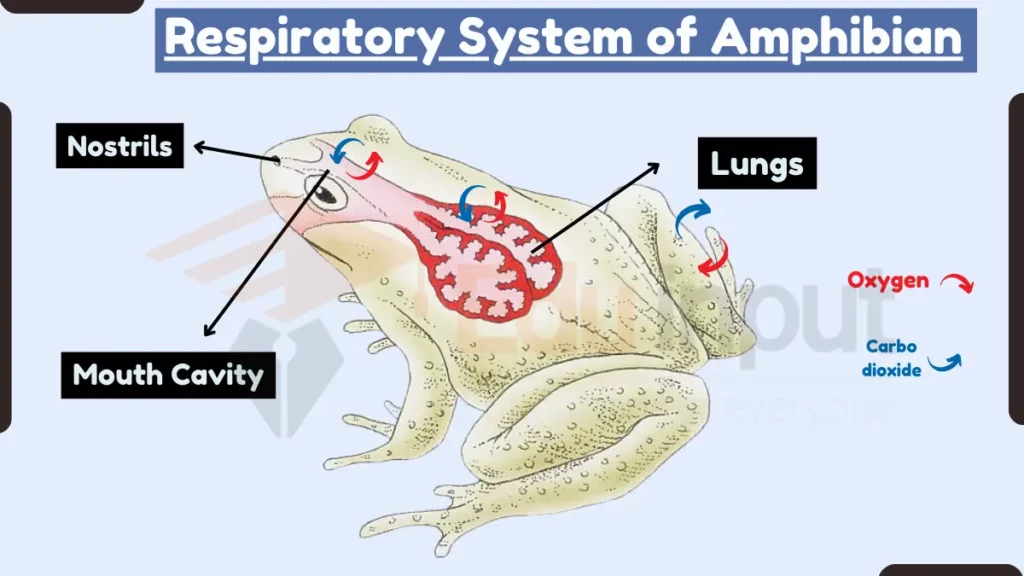
Many adult amphibians have paired lungs that allow them to breathe air. The lungs are relatively simple compared with mammalian lungs but contain internal folds and chambers that provide surfaces for gas exchange.
Air enters through the nostrils and mouth and is moved into the lungs through buccal pumping.
3. Skin
The skin is an important respiratory organ in amphibians. Amphibian skin is thin, moist, and supplied with blood vessels close to its surface.
Oxygen can diffuse through the skin into the bloodstream, while carbon dioxide can move in the opposite direction. This process is called cutaneous respiration.
Because the skin must remain moist for effective gas exchange, many amphibians live in damp environments or remain close to water.
How Do Amphibians Breathe?
Amphibians breathe through gills, lungs, skin, or a combination of these structures depending on their species, age, and environment.
Aquatic larvae commonly breathe through gills and skin. Many adult amphibians breathe using lungs and skin.
Their respiratory system therefore changes according to their stage of development and surroundings.
Respiration in Aquatic Amphibians
Aquatic amphibian larvae, such as tadpoles, commonly depend on gills for extracting oxygen from water. Their moist skin also contributes to gas exchange.
The blood flowing through the gills picks up oxygen from the surrounding water. Carbon dioxide moves from the blood into the water.
This combination of gill and skin respiration allows tadpoles to obtain oxygen while living underwater.
Respiration in Terrestrial Amphibians
Adult amphibians that live mainly on land generally use lungs for breathing air. However, the skin continues to contribute to respiration.
Lung respiration allows oxygen from air to enter the blood, while carbon dioxide leaves the blood and is expelled from the body.
Skin respiration remains particularly important when the amphibian is resting, submerged, or when lung ventilation is limited.
How Respiratory Structures Change During Amphibian Metamorphosis?
The respiratory system of amphibians can change significantly during metamorphosis.
Tadpoles are adapted to aquatic life and commonly use gills and skin. During metamorphosis, the gills regress while the lungs develop and become functional.
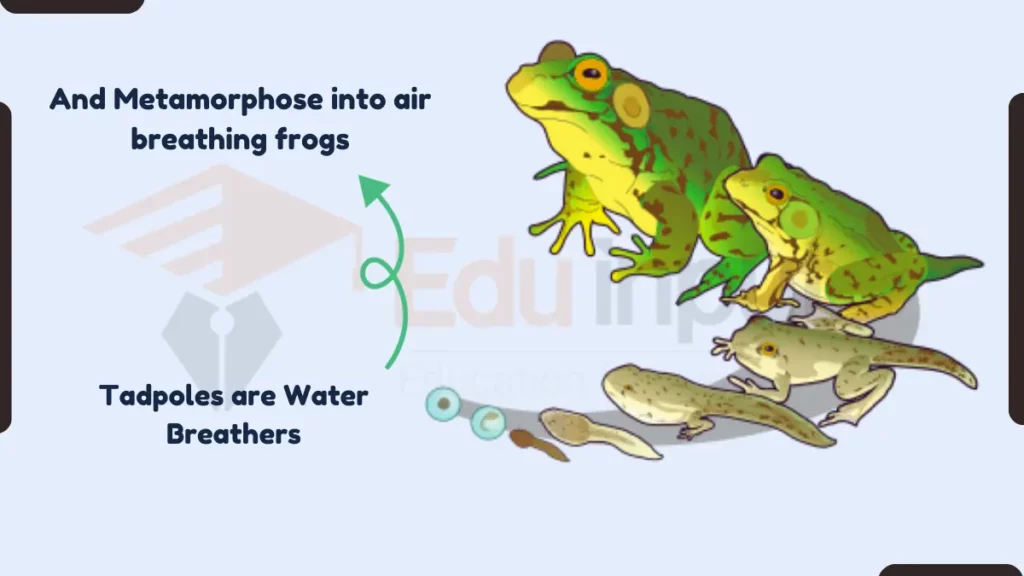
Gills to Lungs
The transition from gills to lungs allows many amphibians to shift from aquatic respiration toward air breathing.
The change does not mean that skin respiration stops. Skin can continue to function as an important respiratory surface throughout the amphibian’s life.
How Does Gas Exchange Occur in Amphibians?
Gas exchange in amphibians occurs through the gills, lungs, and skin. Oxygen moves into the body by diffusion, while carbon dioxide moves out.
Cutaneous Respiration – Cutaneous respiration is gas exchange through the skin. It requires moist skin and a good blood supply close to the skin surface.
Pulmonary Respiration – Pulmonary respiration occurs in the lungs. Many adult amphibians use their lungs to exchange oxygen and carbon dioxide with air.
Branchial Respiration – Branchial respiration is gas exchange through the gills. It is particularly important in aquatic amphibian larvae.
Respiratory Adaptations of Amphibians
Amphibians have several adaptations that support respiration in water and on land.
1. Moist Skin – Moist skin allows gases to dissolve and diffuse across the respiratory surface.
2. Thin Respiratory Surfaces – Thin tissues reduce the distance gases must travel during diffusion.
3. Rich Blood Supply – Blood vessels close to the respiratory surfaces transport oxygen into the body and carry carbon dioxide away.
4. Spongy Lungs – Amphibian lungs contain internal folds and chambers that increase the available surface for gas exchange.
5. Buccal Pumping – Amphibians use movements of the mouth and throat to help move air into their lungs.
Frog Respiratory System
The frog respiratory system uses the skin, buccal cavity, and lungs for respiration. During the tadpole stage, gills are also important.
Frogs can exchange gases through their moist skin. On land, they also use their lungs to breathe air.
How Does a Frog Breathe in Water?
A frog can exchange gases through its moist skin while in water. This is especially useful because skin respiration allows gas exchange without relying entirely on lung breathing.
Do Amphibians Have Lungs?
Yes, many adult amphibians have lungs. However, lungs are not the only respiratory organs used by amphibians.
Tadpoles commonly use gills and skin, while adult frogs and many other amphibians use lungs and skin.
The respiratory system of amphibians is adapted for life in both aquatic and terrestrial environments. The main respiratory organs are gills, lungs, and skin. Tadpoles commonly use gills and skin, while many adults rely on lungs and skin.
This combination of respiratory organs allows amphibians to exchange gases throughout different stages of their lives.
How Do Tadpoles Breathe?
Tadpoles generally breathe through gills and skin. Their gills extract dissolved oxygen from water, while gases can also diffuse through their moist skin.As they develop, the respiratory organs change and the lungs become increasingly important.
Do All Amphibians Go Through Metamorphosis?
No. Amphibian development varies between species. Frogs commonly undergo a distinct larval-to-adult metamorphosis, while some amphibians have different developmental patterns.
Also Read:


Leave a Reply